Description

Disclaimer: Copyright infringement not intended.
Context
The Orkney Islands' consideration of separating from the United Kingdom (U.K.) and becoming a self-governing territory, potentially under Norway.
Details
- The Orkney Islands, an archipelago off the northeast coast of Scotland, is considering ways to separate from the U.K. and become a self-governing territory of Norway.
- The local council proposes exploring alternative forms of governance to provide more economic opportunities for islanders.
Reasons for Consideration
- The Orkney Islands aim to leverage their energy production capabilities, including an oil terminal and renewable resources, to achieve greater economic independence.
- The council leader, James Stockan, believes the islands have been neglected by both the U.K. and Scottish governments and lack fair funding.
- Orkney's contributions to the U.K. economy have not been thoroughly analyzed, and the received dividend is deemed insufficient.
Potential Options
- Economic Independence: Orkney could utilize its energy production capabilities, particularly in wind projects, to achieve economic self-sufficiency.
- Nordic Connection: Orkney is exploring the possibility of establishing a "Nordic connection" with Denmark, Norway, or Iceland, reflecting its historical ties to Norse kingdoms.
- Crown Dependency Structure: Another option being discussed is adopting a crown dependency structure similar to Guernsey, Jersey, and the Isle of Man.
Historical Context
- Orkney was under Norwegian and Danish rule until the late 15th century when it was handed over to Scotland.
- The islands boast ancient Neolithic sites, stunning landscapes, and diverse marine and avian wildlife.
Current Government Support
- Orkney, as one of Scotland's council areas, receives funding from the Scottish government under the U.K.'s devolved system of government.
- The U.K. government is providing funding to grow Scotland's island economies, including Orkney, as part of its efforts to level up communities.
Responses from Governments
- The U.K. government states that it has no plans to change the devolution settlement and emphasizes the strength of the United Kingdom.
- Responses from the Scottish and Norwegian governments are pending at the time of the report.
Council Decision and Future Talks
- The motion to explore alternative forms of governance will be discussed by council members, marking the initial stage of potential negotiations with the U.K. and Scottish governments.
- The process is expected to be lengthy and contentious.
Broader Context
- Orkney's discussion about self-governance aligns with the wider debate on devolution in the U.K., with other regions seeking greater autonomy and self-governance.
- Manchester and Cornwall are among the areas that have secured deals for increased local decision-making.
About Orkney
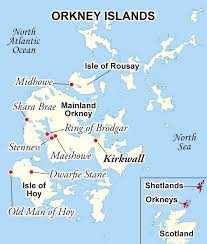
- Orkney is an archipelago located off the northeast coast of Scotland.
- It consists of approximately 70 islands, with the largest ones being Mainland, Hoy, Rousay, and South Ronaldsay.
- The islands are situated in the North Atlantic Ocean, separated from the Scottish mainland by the Pentland Firth.
Disclaimer: Copyright infringement not intended.
Historical Significance
- Orkney has a rich and diverse history, with evidence of human occupation dating back over 5,000 years.
- The islands were under Norse and Danish rule for a significant period until they were transferred to Scotland in the late 15th century.
- Orkney's historical sites, including well-preserved Neolithic structures such as Skara Brae and the Ring of Brodgar, contribute to its status as a UNESCO World Heritage Site.
Economy and Energy Production
- Orkney's economy is primarily based on agriculture, fishing, tourism, and energy production.
- The islands have significant energy resources, including renewable energy from wind, tidal, and wave power.
- Orkney has become a leader in renewable energy innovation and has a high proportion of renewable energy installations.
Language
- The primary language spoken in Orkney is English.
- However, there are also efforts to preserve and promote the local Orcadian dialect, which has distinctive features and vocabulary.
- The Orcadian dialect reflects the Norse and Scottish influences on the islands and contributes to the cultural identity of the local population.
Festivals and Traditions
- Orkney hosts various festivals and events throughout the year, celebrating its cultural heritage.
- The Orkney Folk Festival showcases traditional music, dance, and storytelling.
- The Magnus International Festival celebrates the arts and cultural heritage of Orkney, featuring performances of music, drama, and visual arts.
Folklore and Mythology
- Orkney has a rich tradition of folklore and mythology.
- The islands are associated with Norse mythology and legends, such as the story of the Orcadian hero, Hǫgni.
- Folklore also includes tales of selkies (mythical seal creatures) and other mythical beings believed to inhabit the seas surrounding Orkney.
Arts and Crafts
- Orkney is known for its vibrant arts and crafts scene.
- Local artisans create traditional crafts like pottery, jewelry, and textiles, often inspired by the natural beauty and history of the islands.
- The Orkney Craft Trail allows visitors to explore workshops and studios to witness the creation of these unique handmade products.
Music and Dance
- Music and dance are integral to the cultural fabric of Orkney.
- Traditional folk music is performed using instruments such as fiddles, accordions, and bagpipes.
- The Orkney Ba game, a traditional form of football, is a popular sporting event accompanied by music and dance during festivals.
Cultural Preservation and Heritage Sites
- Orkney places great importance on preserving its cultural heritage.
- The Orkney Islands Council, along with heritage organizations, works to protect and maintain historical sites and artifacts.
- The UNESCO World Heritage Sites, such as Skara Brae and the Heart of Neolithic Orkney, contribute to the preservation and recognition of Orkney's cultural significance.
Integration of Cultural Identity
- The cultural identity of Orkney is integrated into daily life through the arts, festivals, language, and local traditions.
- The residents of Orkney take pride in their unique heritage and actively participate in preserving and promoting their cultural identity.
|
PRACTICE QUESTION
Q) Examine the historical context, economic considerations, and challenges involved in Orkney's desire for alternative forms of governance. (150 words)
|
https://www.cnbc.com/2023/07/03/scotlands-orkney-islands-consider-quitting-the-uk-to-join-norway.html