Description
Disclaimer: Copyright infringement not intended.
Context: The introduction of legislation in the U.S. Senate to grant India 'NATO plus five' defense status.
Details
- Prime Minister Narendra Modi's visit to Washington coincides with the introduction of legislation.
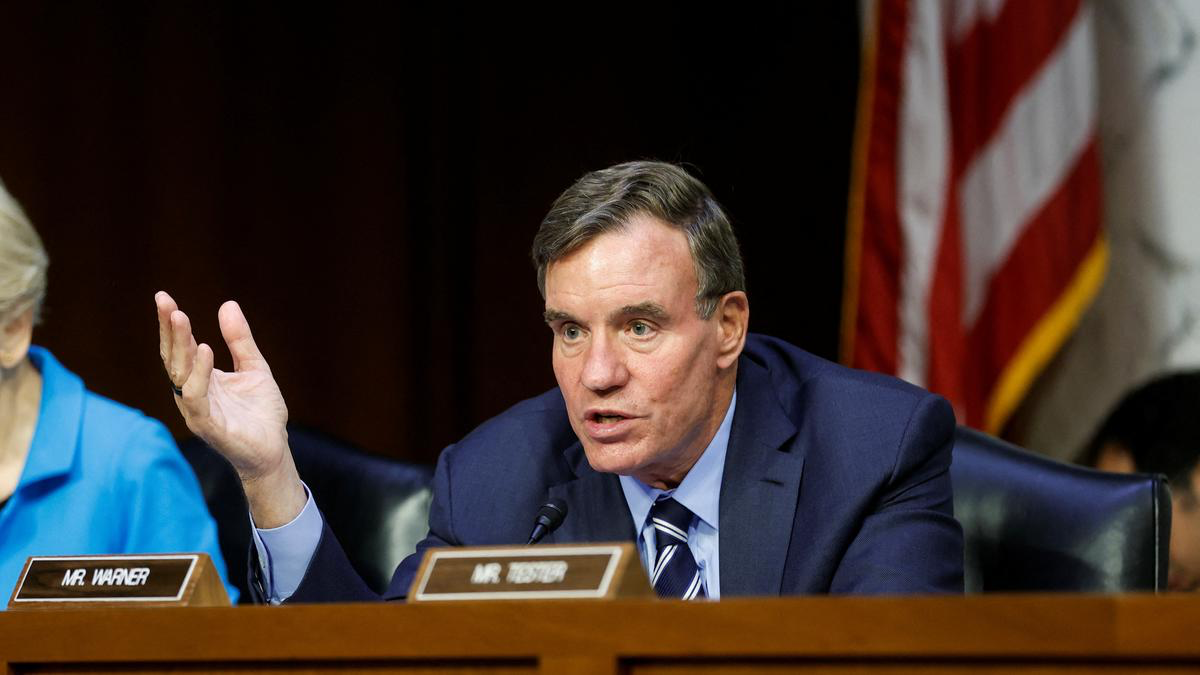
- Senators Mark Warner and John Cornyn, co-chairs of the U.S. Senate India Caucus, will introduce the legislation.
- The legislation aims to grant India 'NATO plus five' defense status.
- India's External Affairs Minister, S. Jaishankar, has already rejected the framework.
'NATO Plus Five' Defense Arrangement
- The current arrangement includes the S., NATO partners, and five countries: Australia, New Zealand, South Korea, Japan, and Israel.
- A U.S. House of Representatives committee on China recommended adding India to the arrangement.
Senator Warner's Announcement
- Senators Warner and Cornyn plan to introduce the legislation as a standalone bill and as an amendment to the defense authorization.
- The goal is to upgrade India-U.S. defense ties by adding India to the 'NATO plus five' arrangement.
- The legislation aims to facilitate the transfer of defense equipment with minimal bureaucratic interference.
India's Rejection
- External Affairs Minister S. Jaishankar stated that the proposed framework does not apply to India.
- The Biden administration understands India's position and the unique circumstances it faces.
Enhancing Defense Capabilities
- Senator Warner defends the move, emphasizing the importance of improving India's defense capabilities, particularly in response to the threat from China.
- He believes increasing defense trade between the U.S. and India is an effective way to achieve this objective.
Human Rights and Democracy
- Senator Warner addresses the issue of human rights and hopes for a reaffirmation of commitment to democracy from Prime Minister Modi.
- He highlights the need for both nations to uphold democratic principles, human rights, freedom of belief, and freedom of expression.
Moving Beyond Existing Descriptions
- Senator Warner aims to strengthen the India-U.S. relationship beyond commonly used descriptions, such as the world's oldest and biggest democracies.
- He envisions a full-fledged partnership between the two nations.

About NATO
NATO (North Atlantic Treaty Organization)
- NATO is an intergovernmental military alliance formed in 1949.
- It was established with the signing of the North Atlantic Treaty.
- The primary purpose of NATO is to promote collective defense and security cooperation among its member countries.
Member Countries
- NATO consists of 31 member countries as of now.
- The original 12 founding members were Belgium, Canada, Denmark, France, Iceland, Italy, Luxembourg, the Netherlands, Norway, Portugal, the United Kingdom, and the United States.
- Additional countries have joined over the years, including Germany, Greece, Spain, Turkey, Poland, and many others.
Collective Defense
- The cornerstone of NATO is the principle of collective defense.
- Article 5 of the North Atlantic Treaty states that an armed attack against one member shall be considered an attack against all members.
- If a NATO member is attacked, other members are obligated to assist and respond collectively, including with military force if necessary.
Security Cooperation
- NATO facilitates security cooperation among member countries through various means.
- It conducts joint military exercises, training, and operations.
- NATO provides a platform for political consultations and coordination on defense and security issues.
Decision-Making
- Decision-making in NATO is based on consensus among member countries.
- Each member has an equal say in the decision-making process, regardless of its size or military capabilities.
- Decisions are made through consultation and discussion among member countries, led by the North Atlantic Council (NAC).
Partnerships
- NATO has developed partnerships with other countries and international organizations.
- Partnerships include the Euro-Atlantic Partnership Council (EAPC) and the Partnership for Peace (PfP) program, among others.
- These partnerships aim to promote dialogue, cooperation, and interoperability between NATO and non-member countries.
Adaptations and Evolutions
- NATO has adapted and evolved over time to address changing security challenges.
- It has expanded its focus beyond Europe to address global security issues.
- NATO engages in activities such as counterterrorism, cybersecurity, and crisis management.
Role in International Security
- NATO plays a crucial role in international security and stability.
- It contributes to deterrence, defense, and conflict resolution.
- NATO has been involved in various military operations, including peacekeeping missions and combat operations in Afghanistan, the Balkans, and elsewhere.
Transatlantic Alliance
- NATO represents a strong transatlantic alliance between North America and Europe.
- It fosters cooperation and solidarity among member countries on both sides of the Atlantic Ocean.
- The United States plays a significant role within NATO as one of the leading member countries.
About 'NATO plus five' Arrangement
- The 'NATO plus five' arrangement refers to a defense cooperation framework between the United States, its NATO partners, and five non-NATO countries.
- The five non-NATO countries included in this arrangement are: Australia, New Zealand, South Korea, Japan and Israel
Purpose and Features:
- The purpose of the 'NATO plus five' arrangement is to enhance defense cooperation, interoperability, and security coordination between the United States, NATO, and the five partner countries.
- It allows for the transfer of defense equipment and technology among the participating nations.
- The arrangement facilitates military exercises, information sharing, and joint defense planning.
|
PRACTICE QUESTION
Q) Discuss the significance of NATO (North Atlantic Treaty Organization) in the contemporary global security architecture. (150 words)
|
https://epaper.thehindu.com/ccidist-ws/th/th_delhi/issues/40658/OPS/GTKBCVN5O.1.png?cropFromPage=true