Description
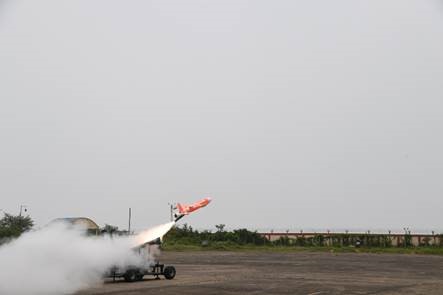
Context: The Rudram missile is launched from a Sukhoi-30 MKI. This India’s first indigenous anti-radiation missile, Rudram, is developed for the Indian Air Force.
What is an anti-radiation missile?
- Anti-radiation missiles are designed to detect, track and neutralise the adversary’s radar, communication assets and other radio frequency sources, which are generally part of their air defence systems.
- It comprises an inertial navigation system — a computerised mechanism that uses changes in the object’s own position — coupled with GPS, which is satellite-based.
- It has a “passive homing head” — a system that can detect, classify and engage targets (radio frequency sources in this case) over a wide band of frequencies as programmed.
- Once the Rudram missile locks on the target, it is capable of striking accurately even if the radiation source switches off in between.
- It has an operational range of more than 100 km, based on the launch parameters from the fighter jet.
How was Rudram developed?
- Rudram is an air-to-surface missile, designed and developed by the Defence Research and Development Organisation (DRDO).
How significant are such missiles in aerial warfare?
- Rudram has been developed for the IAF’s requirement to enhance its Suppression of Enemy Air Defence (SEAD) capability.
- As one of the many aspects of SEAD tactics, anti-radiation missiles are used mainly in the initial part of air conflict to strike at the air defence assets of the enemy
- Rudram hit the radiation target with pinpoint accuracy.
https://indianexpress.com/article/explained/why-anti-radiation-missile-rudram-matters-6718894/