

Copyright infringement not intended
Picture Courtesy: THE HINDU
India-Bangladesh relations are evolving from historical ties established during the 1971 liberation war to a more intricate partnership that is central to India's 'Neighbourhood First' and 'Act East' policies.
|
Read all about: INDIA BANGLADESH RELATIONS l ON INDIA-BANGLADESH TRADE-RELATED TENSIONS l INDIA BANGLADESH BORDER DISPUTE l INDIA ENDS KEY TRANSSHIPMENT ROUTE FOR BANGLADESH EXPORTS |
Strategic Importance of Bangladesh for India
Security of the Northeast (Siliguri Corridor)
Geostrategy & Maritime Security
Economic & Energy Integration
Emerging Strategic Risks
The China Factor
China is a key development and strategic partner for Bangladesh, challenging India's traditional influence. Bangladesh practices strategic hedging, balancing ties with both Asian powers for maximum national benefit.
Unresolved Bilateral Issues
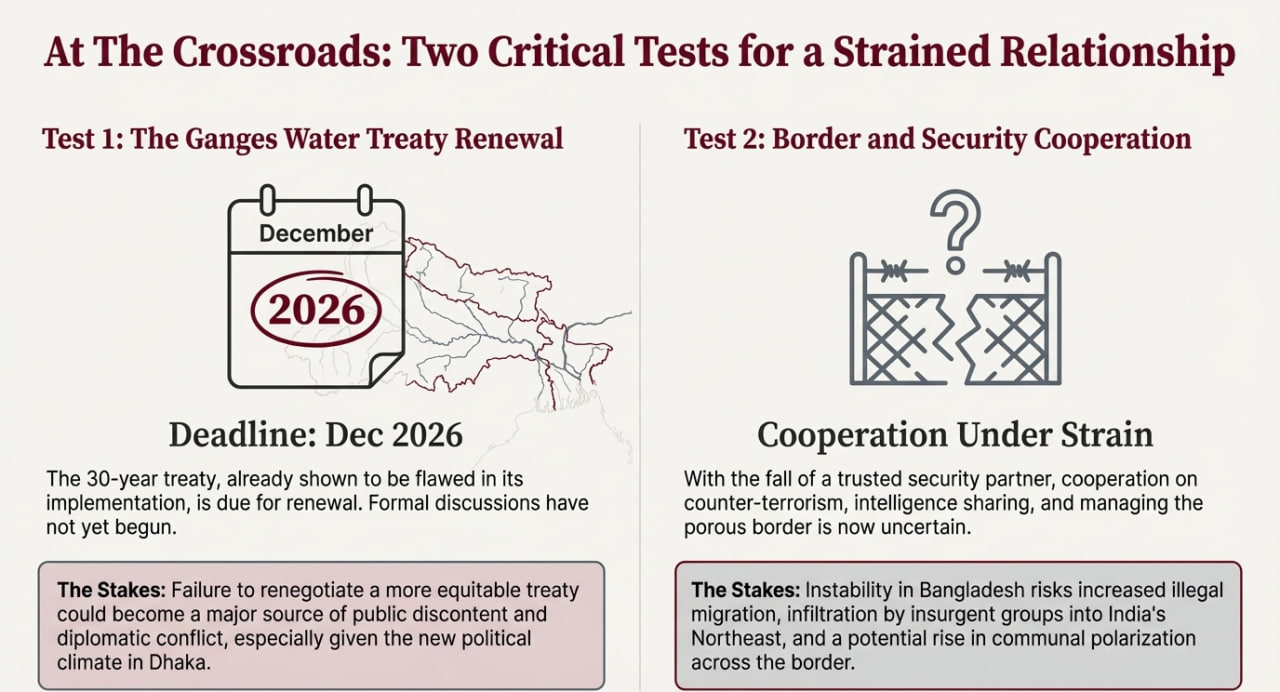 Internal Dynamics in Bangladesh
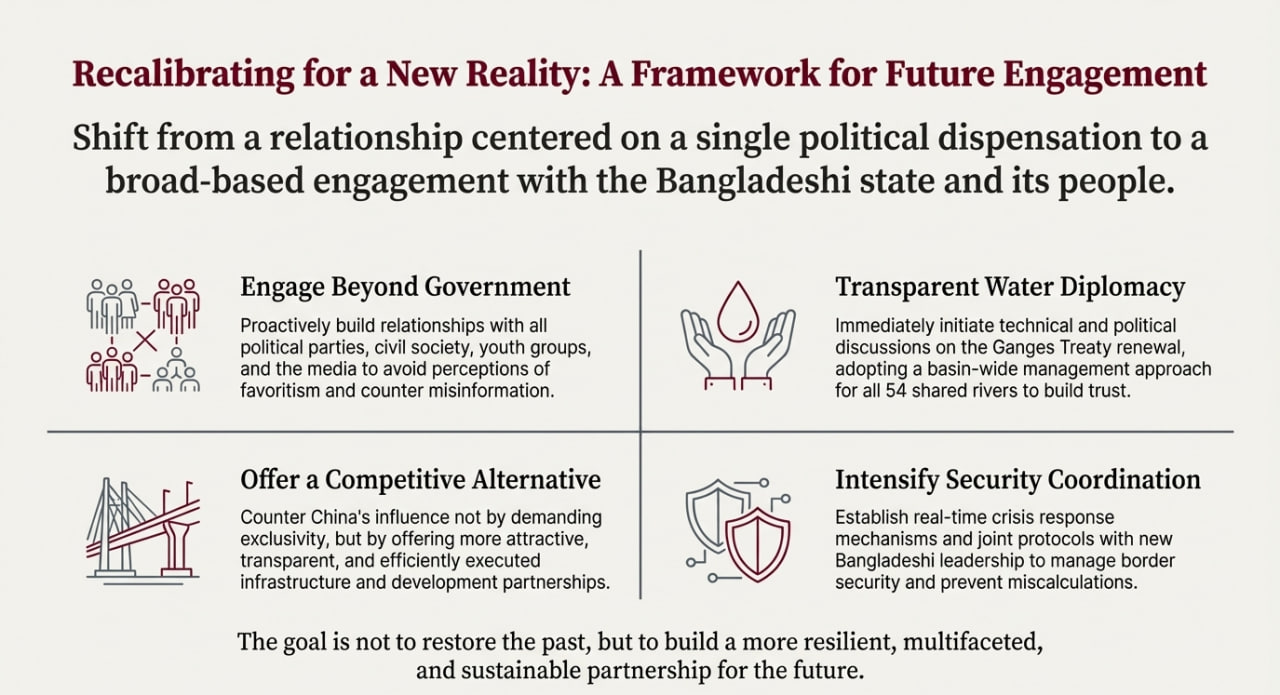
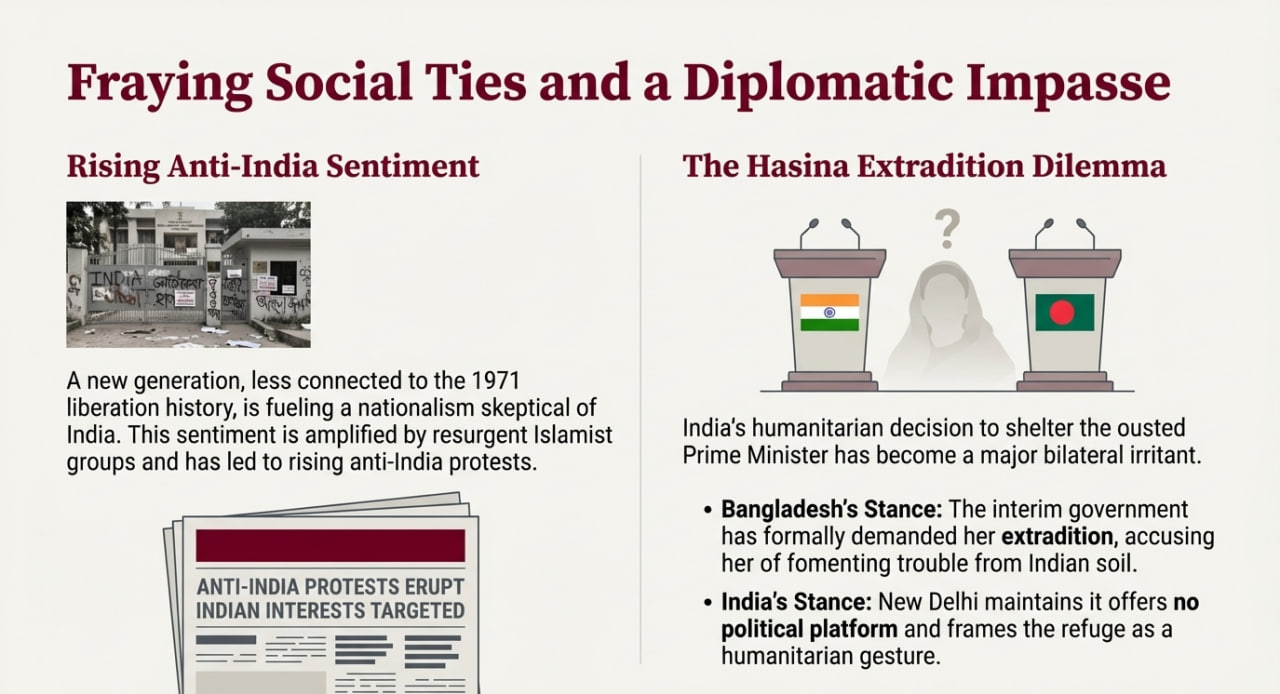 Way Forward for India
To revitalize the relationship, India must shift its approach from being history-centric to future-oriented, focusing on delivery, mutual respect, and shared prosperity.
Focus on Timely Delivery: Credibility is built on executing projects efficiently. India must accelerate the implementation of its Lines of Credit and connectivity projects to demonstrate tangible benefits.
Resolve the Teesta Issue: Creative diplomatic solutions involving cooperative federalism are needed. This requires aligning the interests of the central government with those of West Bengal to reach a mutually acceptable agreement.
Strengthen People-to-People Connect: Enhance youth, cultural, and academic exchanges to build a broader base of support for the relationship and counter misinformation.
Embrace Bangladesh's Autonomy: India should view Bangladesh's engagement with other powers like China through a pragmatic lens, avoiding a zero-sum game. Compete on the merits of quality, transparency, and shared values.
Strengthen Regional Platforms: Promote cooperation under frameworks like BIMSTEC, which positions India as a facilitator of regional public goods in areas like disaster management, maritime security, and energy connectivity.
 Conclusion
The India-Bangladesh partnership is critical but faces challenges from geopolitical competition, Bangladesh's rising aspirations, and unresolved disputes. Success requires strategic patience, economic credibility, and treating Bangladesh as a sovereign partner to ensure a stable and prosperous Bay of Bengal region, which is essential for India's 'Neighbourhood First' and 'Act East' policies.
Source: THE HINDU
|
PRACTICE QUESTION Q. "The current political transition in Bangladesh represents a generational shift that challenges the traditional foundations of India-Bangladesh ties." Critically analyze. (250 Words) |
Relations have strained following the August 2024 resignation of Prime Minister Sheikh Hasina, whose government was considered pro-India. The new interim government and the rise of political forces with perceived anti-India views have altered diplomatic dynamics, leading to mutual recriminations and trade restrictions.
This rail link is a crucial connectivity project under India's 'Act East' policy. It is designed to reduce the travel distance between Agartala (Tripura) and Kolkata from 1,600 km to just 500 km, providing India's landlocked northeastern states with vital access to Bangladeshi ports like Chattogram. Its recent suspension is a major setback.
The Teesta River flows from India into Bangladesh, and sharing its water is a critical and sensitive issue. An agreement has been stalled since 2011, mainly due to opposition from the Indian state of West Bengal. The lack of a resolution is a major point of contention in the bilateral relationship.
© 2026 iasgyan. All right reserved