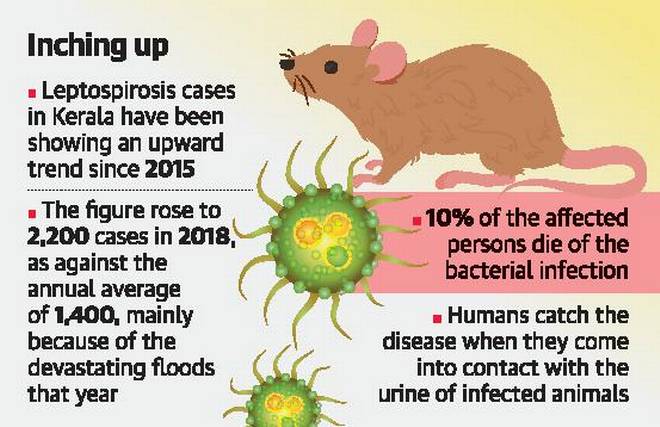
Context: More than 1,000 leptospirosis cases are reported from Kerala every year, with 10% of the affected persons dying of it. The cases are showing an upward trend since 2015.
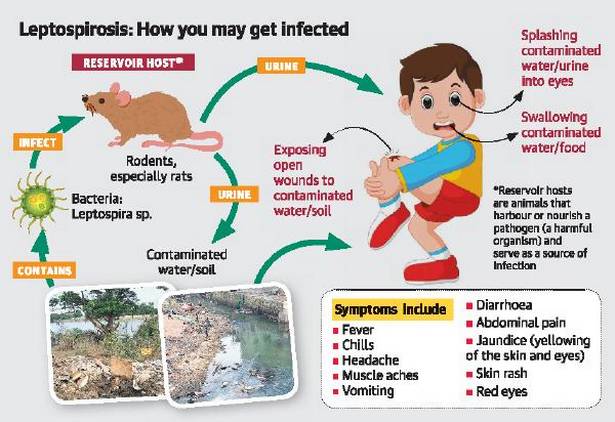
Humans catch the disease when they come into contact with the urine of infected animals or a urine-polluted environment.
Farmers or those working in contaminated surface water are more prone to the disease, and wounds and injuries are factors that increase the risk.
Leptospirosis is a zoonotic disease of public health importance causing huge morbidity and mortality in Asian countries.
Leptospirosis
It is a bacterial disease that affects humans and animals.
It is caused by bacteria of the genus Leptospira.
In humans, it can cause a wide range of symptoms, some of which may be mistaken for other diseases.
Some infected persons, however, may have no symptoms at all.
Without treatment, Leptospirosis can lead to kidney damage, meningitis (inflammation of the membrane around the brain and spinal cord), liver failure, respiratory distress, and even death.
A single dose of doxycycline 200 mg tablet is effective as a preventive medicine against leptospirosis, a bacterial infection, if given to the flood-affected within a week of the natural calamity.