

Delhi’s emergence as India’s capital was shaped by its strategic location, imperial legacy, and colonial administrative needs. Declared the capital in 1911 during the Delhi Durbar, the city evolved into New Delhi through planned colonial architecture and governance structures, and later retained its central role after Independence, symbolising continuity of power and national administration.
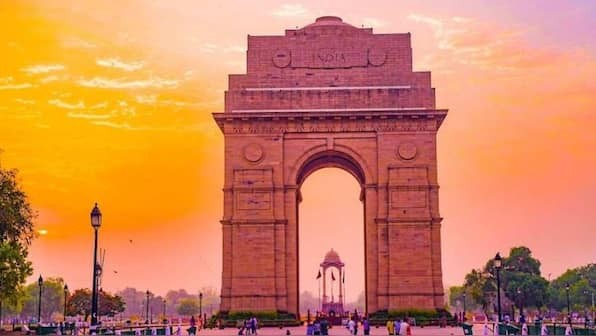
How Delhi became the new capital of British India
Copyright infringement not intended
Picture Courtesy: First Post
December 12 marks a pivotal moment in Indian history, as it commemorates the 1911 announcement by King George V transferring the capital of British India from Calcutta to Delhi, an event that laid the foundation of modern India’s political centre.
Location of Delhi:
Delhi is situated in northern India and is bordered by the States of Uttar Pradesh and Haryana, occupying a strategic position along the left bank of the Yamuna River. Its central location has historically made it a focal point of political power and administration.
Historical background of Delhi:
Delhi is not a single city but a layered historical landscape, often described as a palimpsest, reflecting over 3,500 years of continuous urban history. Across different periods, rulers founded, abandoned, destroyed, and rebuilt cities within a compact area of nearly 60 square miles, resulting in the emergence of multiple capitals over time.
Multiple Capitals of Delhi: Nearly fourteen capital cities were established in and around present-day Delhi.
Shahjahanabad (The Mughal Capital): Shahjahanabad was planned as an imperial capital comprising a fort–palace complex and an adjoining city.
Imperial Durbars at Delhi: Delhi gained renewed prominence under British rule as the site of Imperial Durbars, ceremonial assemblies symbolising imperial authority.
What are the reasons for shifting the capital from Calcutta to Delhi?
The decision to move the capital was influenced by multiple political and administrative factors:
Making of New imperial capital:
The capital shift was accompanied by the decision to build an entirely new city—New Delhi—to reflect British imperial authority.
Delays in making: Although the foundation stone was laid in 1911, construction faced major setbacks due to World War I, which caused funding shortages and labour constraints.
Delhi in Independent India:
Post-Independence, Delhi retained its central role as the seat of India’s Parliament, Presidency, and executive authority, evolving into a city that blends ancient heritage with modern governance.
Conclusion:
Delhi’s journey as India’s capital reflects the continuity of power, history, and governance across centuries. From ancient imperial cities to its selection as the British capital in 1911 and its role in independent India, Delhi has evolved into a political and administrative hub that blends rich historical legacy with modern democratic institutions.
Source: Firstpost
|
Practice Question “Delhi’s evolution as India’s capital reflects both historical continuity and political strategy.” Discuss (250 words). With reference to the shift of the capital of British India from Calcutta to Delhi, consider the following statements: 1. The announcement to shift the capital was made during the Delhi Durbar of 1911. 2. The decision was primarily influenced by the political unrest following the Partition of Bengal (1905). 3. New Delhi was designed by Edwin Lutyens and Herbert Baker and formally inaugurated in 1931. 4. The capital was shifted immediately in 1911 and all government offices moved the same year. Which of the statements given above are correct? A. 1, 2 and 3 only Answer: A Explanation: |
Delhi was declared the capital of British India on 12 December 1911 during the Delhi Durbar by King George V.
The shift was driven by political unrest in Calcutta after the Partition of Bengal (1905), administrative convenience, Delhi’s central location, and its long imperial legacy.
Delhi was designed by British architects Edwin Lutyens and Herbert Baker.

© 2026 iasgyan. All right reserved