

Copyright infringement not intended
Picture Courtesy: THE HINDU
Context
India's rapid urban transformation is projected to result in the world's second-largest urban population by 2035, presenting a critical challenge of balancing economic growth with the preservation of natural ecosystems.
Urbanization is a transformative socioeconomic process that reshapes the Earth's surface. Today, 55% of the world's population lives in urban areas, a proportion that is expected to increase to 68% by 2050. (Source: UN)
The expansion of urban areas is a primary driver of land-use change, significantly impacting the structure, function, and stability of both natural and human-made ecosystems.
Viewing cities as dynamic ecosystems—not just concrete spaces—is crucial for sustainable development, as they consume resources and generate waste, impacting their surrounding environment, water, and biodiversity.
As India's urban population is projected to reach 675 million by 2035, managing this urban-ecological link is essential for building resilient and livable cities. (Source: NITI Aayog).
Unplanned urban growth disrupts the natural balance, leading to severe environmental consequences across various domains.
Land and Biodiversity Degradation
Urban sprawl irreversibly converts forests, wetlands, and farmlands into built areas, causing habitat fragmentation, isolating wildlife, and decreasing urban biodiversity.
For example, the rapid loss of wetlands in cities like Bengaluru and Chennai has diminished bird and aquatic life and reduced the cities' natural flood defenses.
Disruption of the Urban Water Cycle
Widespread concretisation prevents the natural recharging of groundwater aquifers.
The encroachment on and destruction of natural drainage systems like rivers, lakes, and floodplains obstruct the flow of water.
This destructive combination results in a paradox of frequent urban floods during monsoons and severe water scarcity in other seasons.
Indian Cities as Climate Risk Hotspots
The environmental damage from unplanned urbanisation directly amplifies climate-related risks, making cities vulnerable hotspots.
|
Climate Risk |
Causes & Consequences |
|
|
|
Air and Noise Pollution |
|
Environmental Injustice
Ecosystem degradation disproportionately affects the urban poor. Slums and informal settlements are located on high-risk lands, such as floodplains or near polluted industrial zones, increasing their exposure to floods, heat stress, and diseases.
Weakened Urban Governance
Municipal bodies are trapped in a cycle of crisis management (disaster response) rather than long-term, proactive planning.
The financial burden of managing urban floods, providing clean water, and addressing public health issues rises, straining already limited resources.
Flaws in Urban Planning Models
Fragmented Approach: Master Plans treat natural features like wetlands and forests as "vacant land" available for development, ignoring their ecological functions.
Siloed Governance: Multiple agencies manage land, water, environment, and forests in isolation, without an integrated ecosystem-based strategy. This lack of coordination prevents holistic management.
Capacity Gaps: NITI Aayog reported that 65% of urban settlements lack master plans due to severe shortages in qualified planners, fiscal autonomy, and ecological data integration.
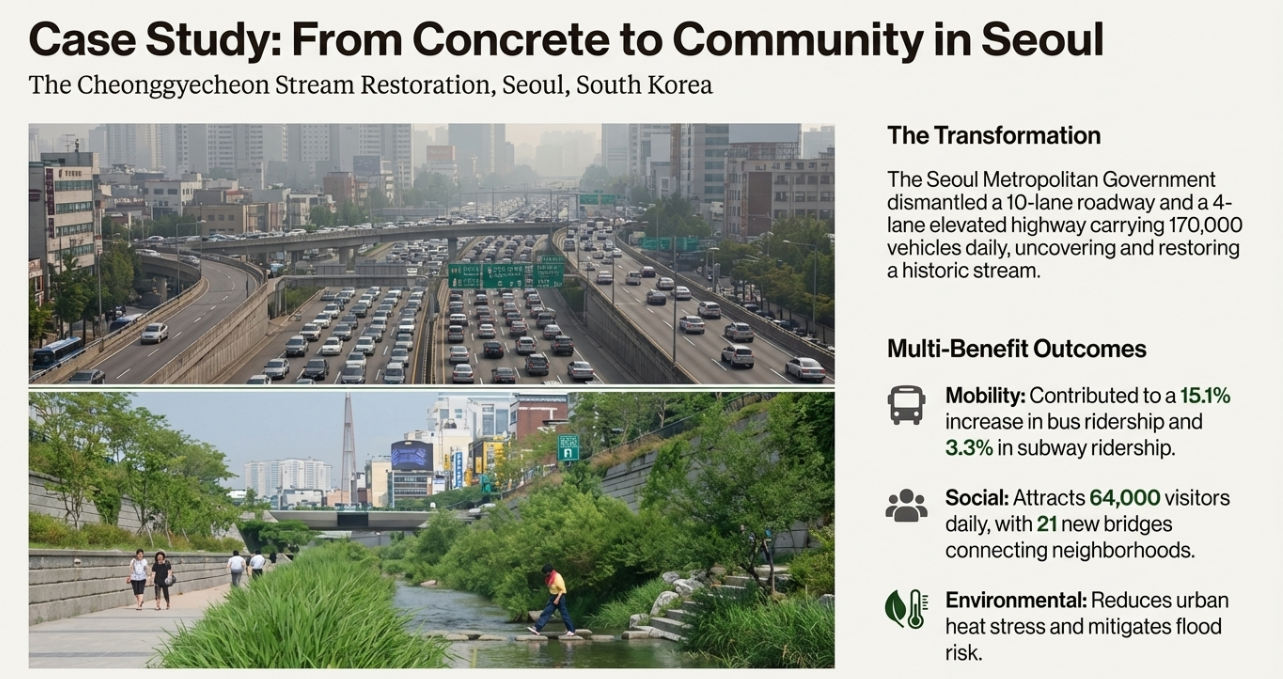 Redesigning Cities: The Path to Urban Resilience
To build a sustainable urban future, a paradigm shift is needed from conventional "grey infrastructure" (concrete-based) to "green infrastructure" that leverages nature's power.
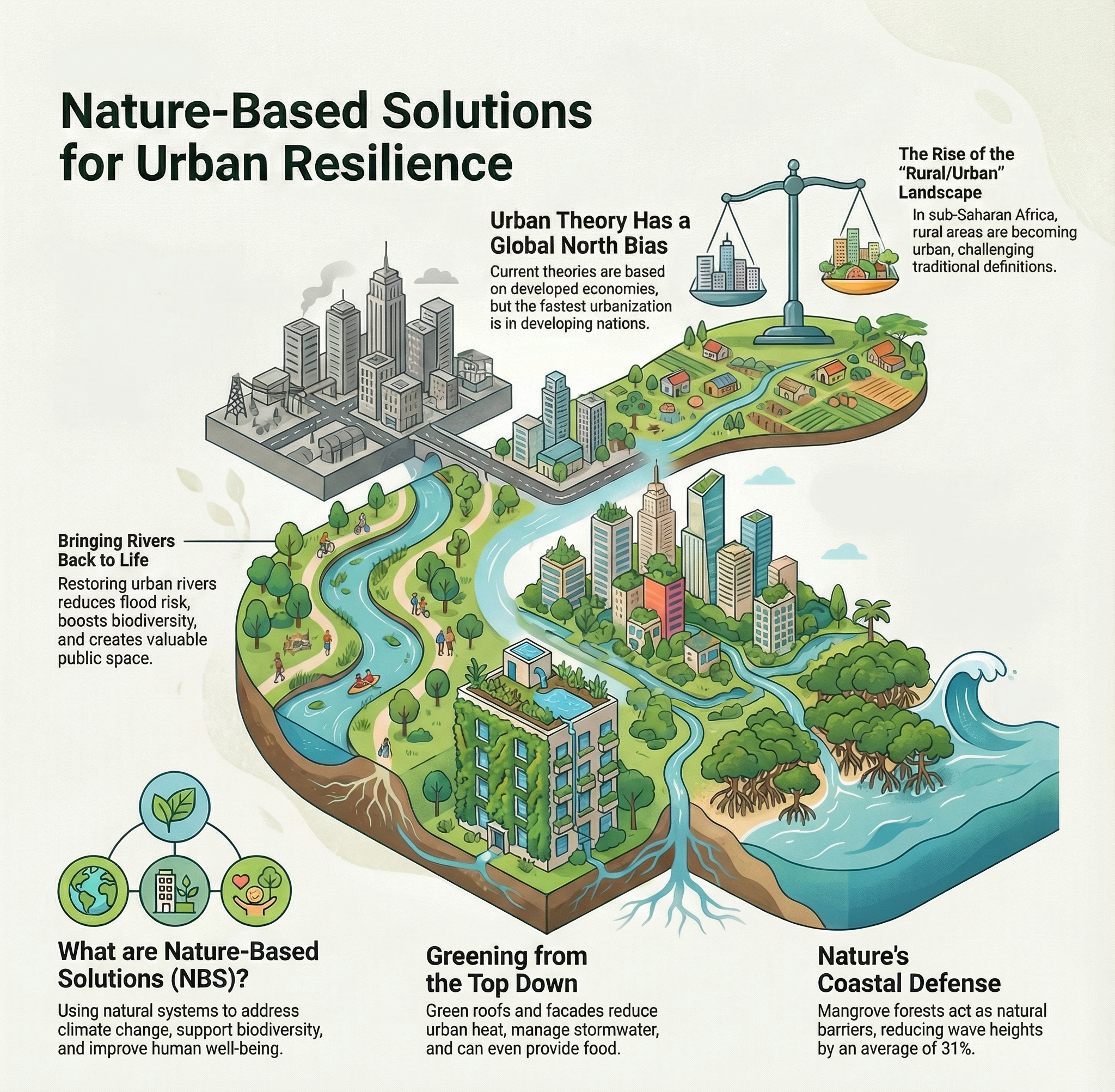
Nature-Based Solutions (NBS) are actions that protect, sustainably manage, and restore natural or modified ecosystems to address societal challenges effectively and adaptively. They provide human well-being and biodiversity benefits.
 Way Forward
Transforming Indian cities requires a multi-pronged approach involving legal, administrative, and community-level changes.
Integrate Ecology into Urban Planning
Master Plans must be developed using ecological mapping (e.g., GIS-based data on water bodies, green corridors) as a foundational layer. City-wide Environmental Impact Assessments (EIAs) should be mandated instead of project-specific ones.
Strengthen Urban Local Bodies (ULBs)
Equip ULBs with the technical capacity and real-time environmental data needed for informed decision-making. The Atal Mission for Rejuvenation and Urban Transformation (AMRUT) 2.0, for example, aims to promote a circular economy of water and enhance urban water security.
Promote Citizen and Market Participation
Encourage community-led initiatives for restoring lakes and parks. Provide financial incentives for green buildings, rainwater harvesting, and rooftop solar installations. Promote corporate social responsibility (CSR) investments in urban green infrastructure.
India's urban future requires a shift from mere expansion to building genuine resilience by viewing cities as socio-ecological systems and treating nature as a foundational asset, aligning urban growth with climate adaptation goals for economic and environmental security.
Source: THEHINDU
|
PRACTICE QUESTION Q. Discuss the impact of rapid urbanization on 'Ecosystem Services' in Indian Metropolises. Suggest measures to integrate Nature-Based Solutions (NbS) in urban planning. (250 Words) |
The Urban Heat Island (UHI) effect is a phenomenon where metropolitan areas are significantly warmer than their surrounding rural areas. This occurs because urban materials like concrete and asphalt absorb and retain more solar heat than natural landscapes.
Nature-based Solutions are actions to protect, sustainably manage, and restore natural or modified ecosystems to address societal challenges effectively. In cities, this includes creating green roofs, permeable pavements, and urban wetlands to manage stormwater, reduce heat, and improve air quality.
The primary objective of Atal Mission for Rejuvenation and Urban Transformation (AMRUT) 2.0 is to provide universal coverage of water supply through functional tap connections in all statutory towns and to provide sewerage and septage management in 500 AMRUT cities, promoting a circular economy of water.
© 2026 iasgyan. All right reserved