

Copyright infringement not intended
Picture Courtesy: THEHINDUBUSINESSLINE
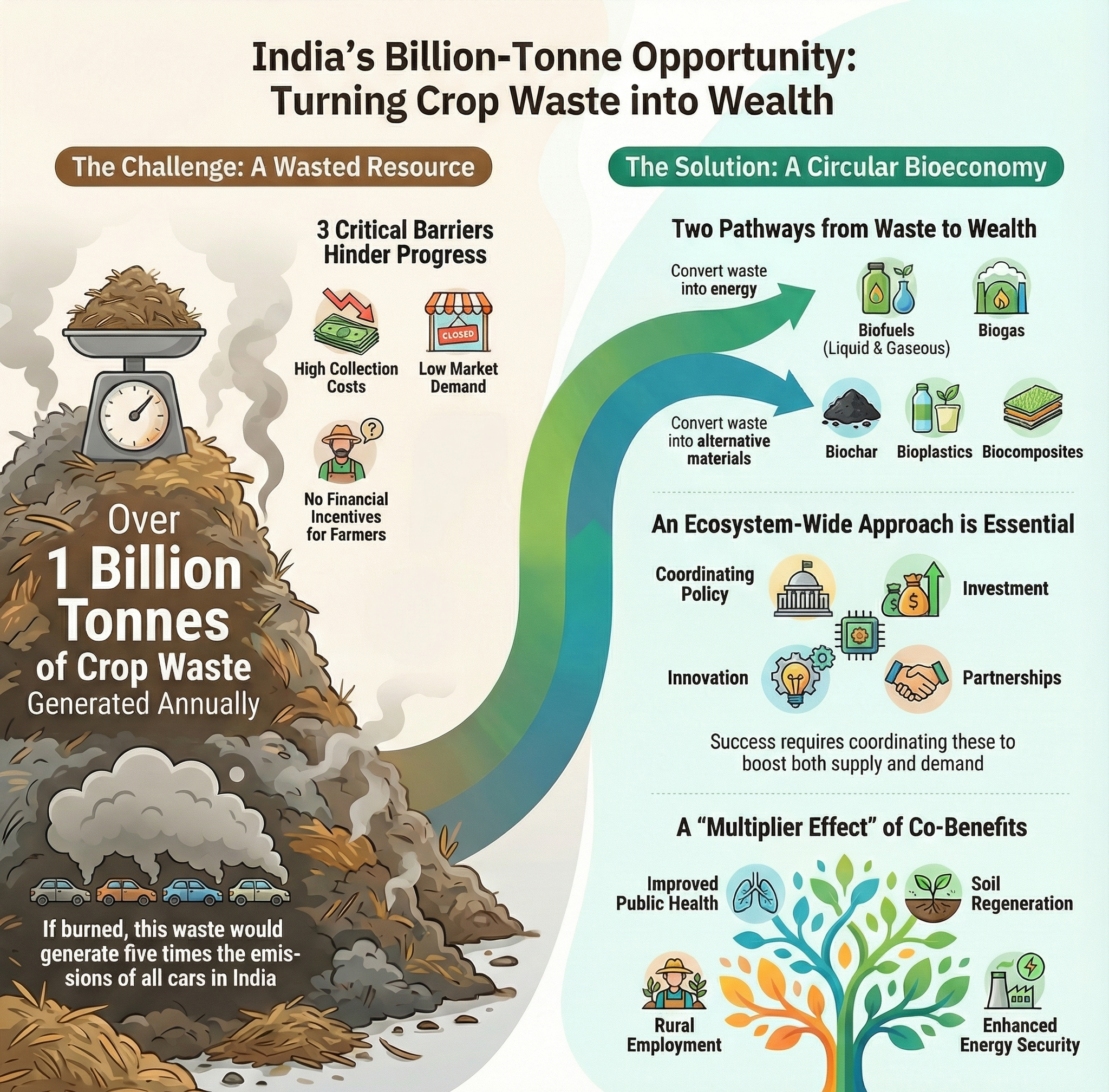
India faces a major crisis due to the annual burning of over 500 million tonnes of crop residue, a practice driven by economic need that links farm distress, severe air pollution, climate change, and public health issues, highlighting the need to convert this agricultural byproduct into a resource for a sustainable circular economy.
Crop residue refers to the plant materials that remain in an agricultural field or orchard after a crop has been harvested. Key examples include:
Types of Crop Residue
Once considered mere "waste," it is now recognized as a valuable natural resource for soil health, energy production, and industrial use.
 Why Do Farmers Resort to Burning?
The decision to burn crop residue is driven by a combination of economic, technological, and logistical factors:
The problem is acutely acute due to factors like high cropping intensity, MSP-driven monoculture of rice and wheat, and the widespread use of combine harvesters that leave behind stalks.
The crisis is geographically concentrated, with states like Punjab, Haryana, Uttar Pradesh, and Maharashtra being major contributors to residue burning.
 What are the Impact of crop residue burning?
Environmental Costs
Health & Economic Costs
 The Opportunity: Creating Value from Agri-Residue
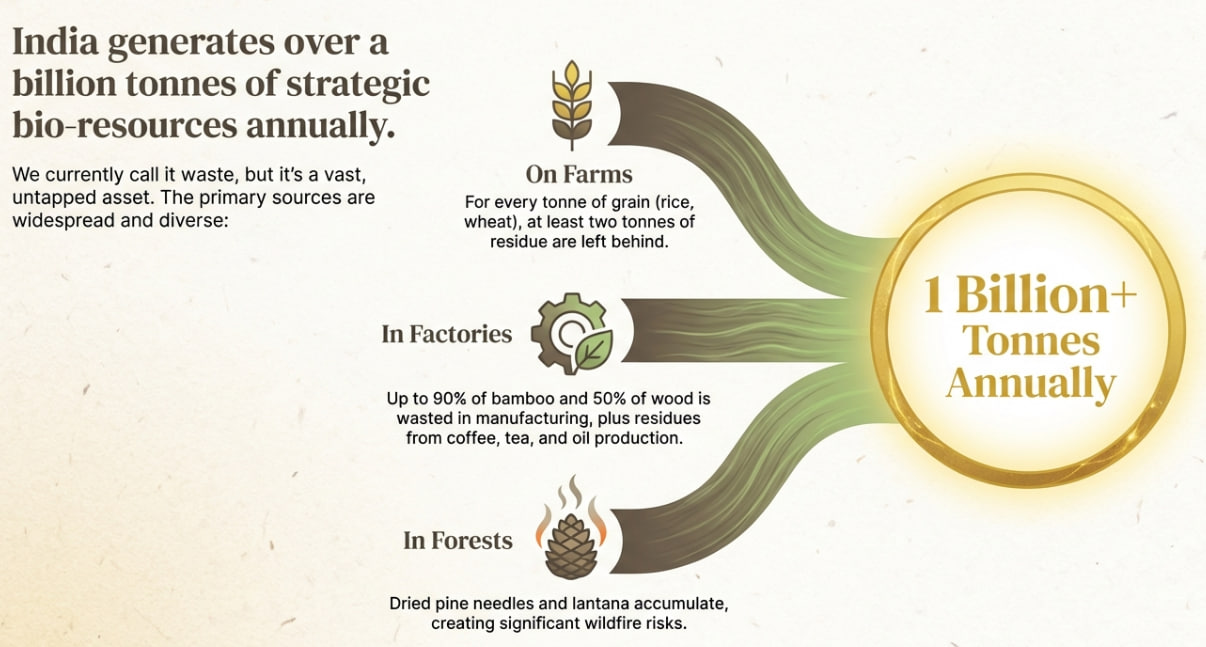
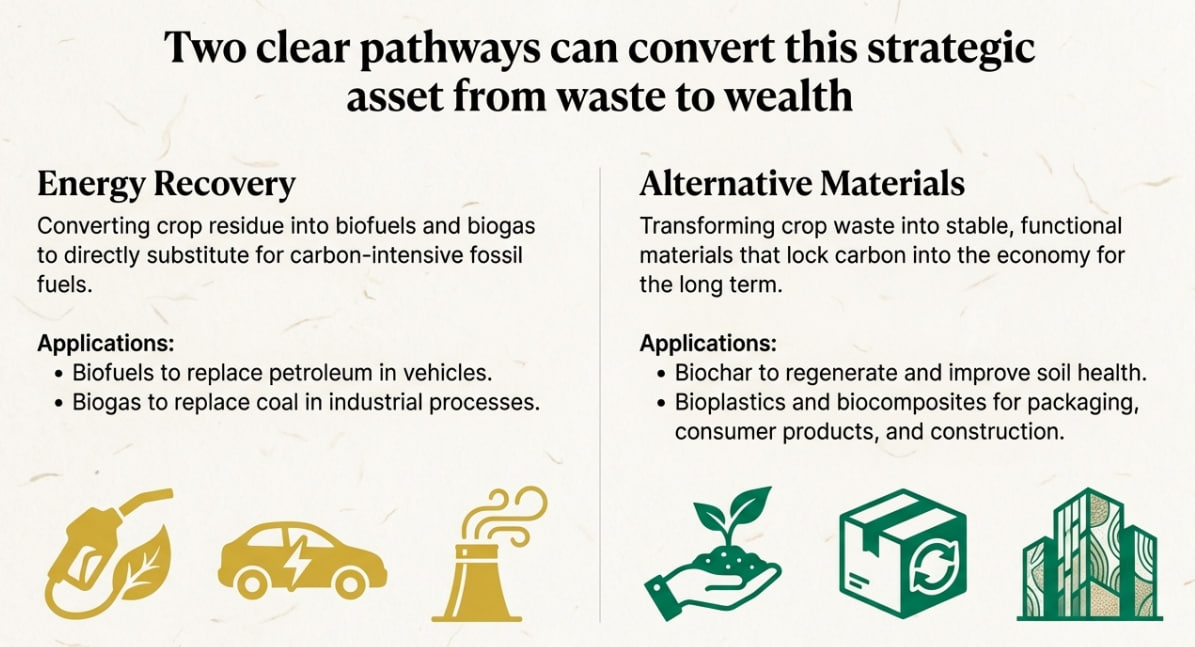
Managing crop residue effectively represents a major opportunity to advance India's economic, energy, and climate goals. This can be achieved through two primary approaches: in-situ (on-field) and ex-situ (off-field) management.
Value Creation (Ex-Situ Management)
Bio-Energy
Reduces fossil fuel import bill, enhances energy security, and cuts GHG emissions.
Bio-Products
Promotes a circular economy, provides alternatives to single-use plastics, and supports carbon farming.
Soil Solutions (In-Situ)
Improves soil moisture, reduces weed growth, enhances soil organic carbon, and cuts fertilizer costs for farmers.
 Government Initiatives
National Bioenergy Programme
Launched by the Ministry of New and Renewable Energy (MNRE), it provides financial assistance for biomass power projects, CBG plants, and briquette manufacturing. The programme has been extended until 2025-26.
SATAT Initiative
(Sustainable Alternative Towards Affordable Transportation) aims to establish 5,000 CBG plants, creating a market for biomass by guaranteeing offtake of CBG by Oil Marketing Companies.
Promotion of Agricultural Mechanization for In-Situ Management
A central sector scheme providing financial assistance to farmers and Custom Hiring Centres (CHCs) in Punjab, Haryana, UP, and Delhi to purchase crop residue management machinery like Happy Seeders and Super Seeders.
(PM Programme for Restoration, Awareness, Nourishment and Amelioration of Mother Earth) indirectly supports residue management by promoting the balanced use of chemical and alternative fertilisers, including organic manure derived from composted residue.
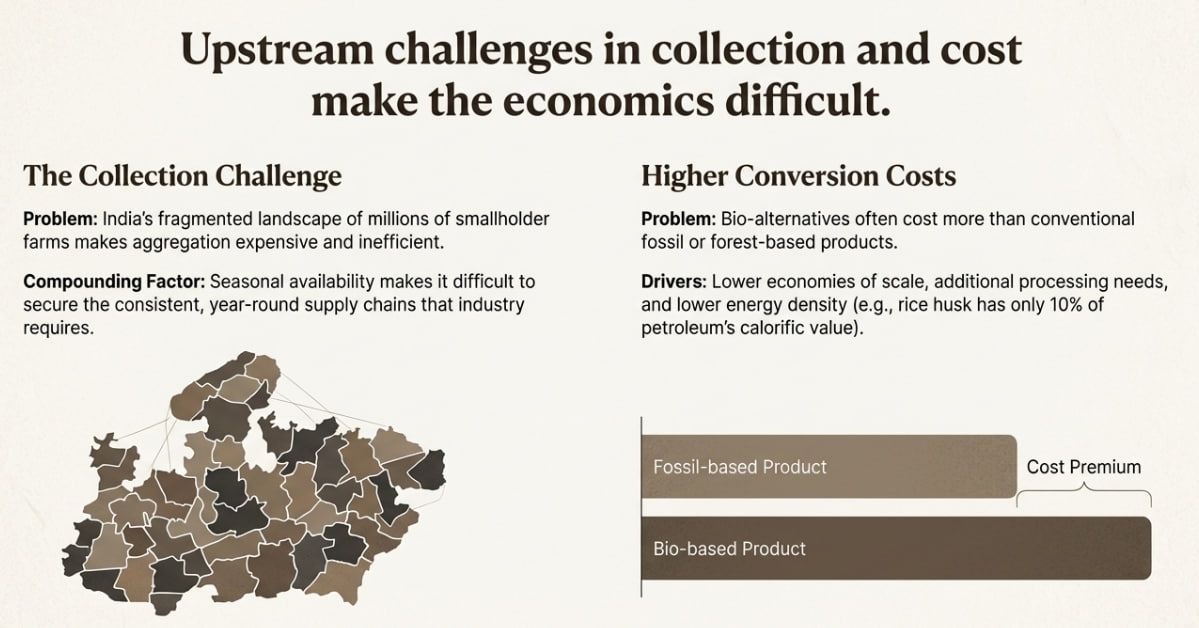
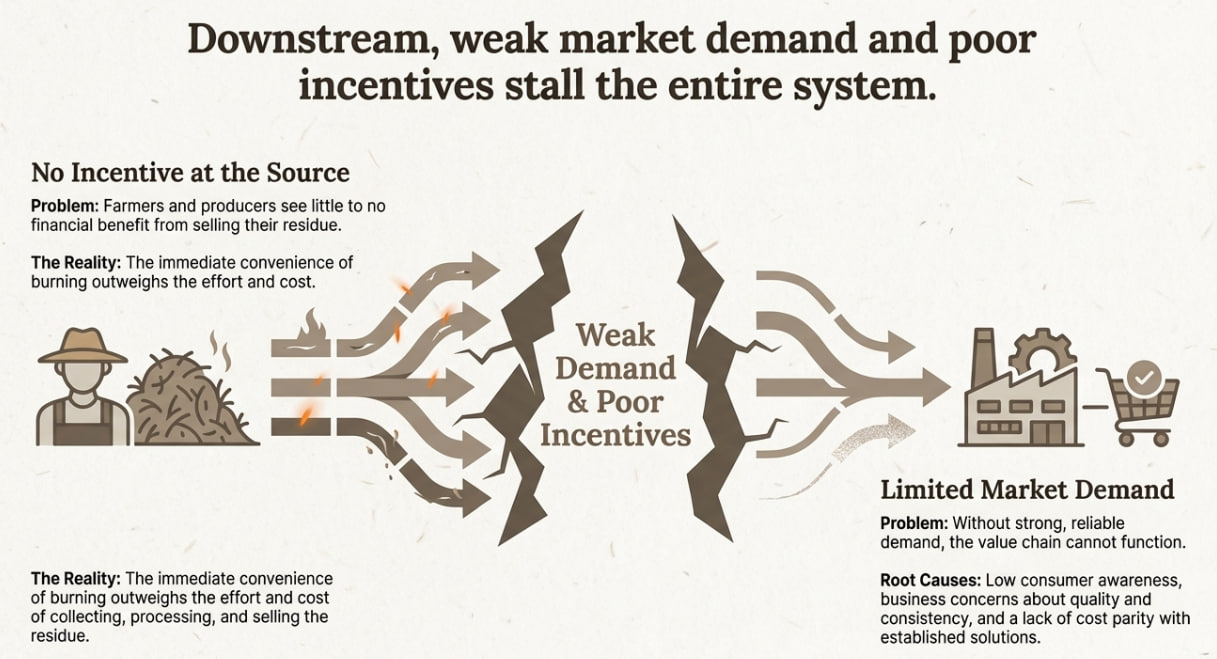
Supply Chain & Logistics: High costs of collection, aggregation, and transportation of bulky biomass.
Economic Viability: Lack of a stable and remunerative price for crop residue for farmers.
Technological Gaps: Need for more efficient and affordable decentralised processing technologies.
Behavioral Change: Overcoming the long-standing practice of burning requires sustained awareness campaigns and strong incentives.
 Way Forward
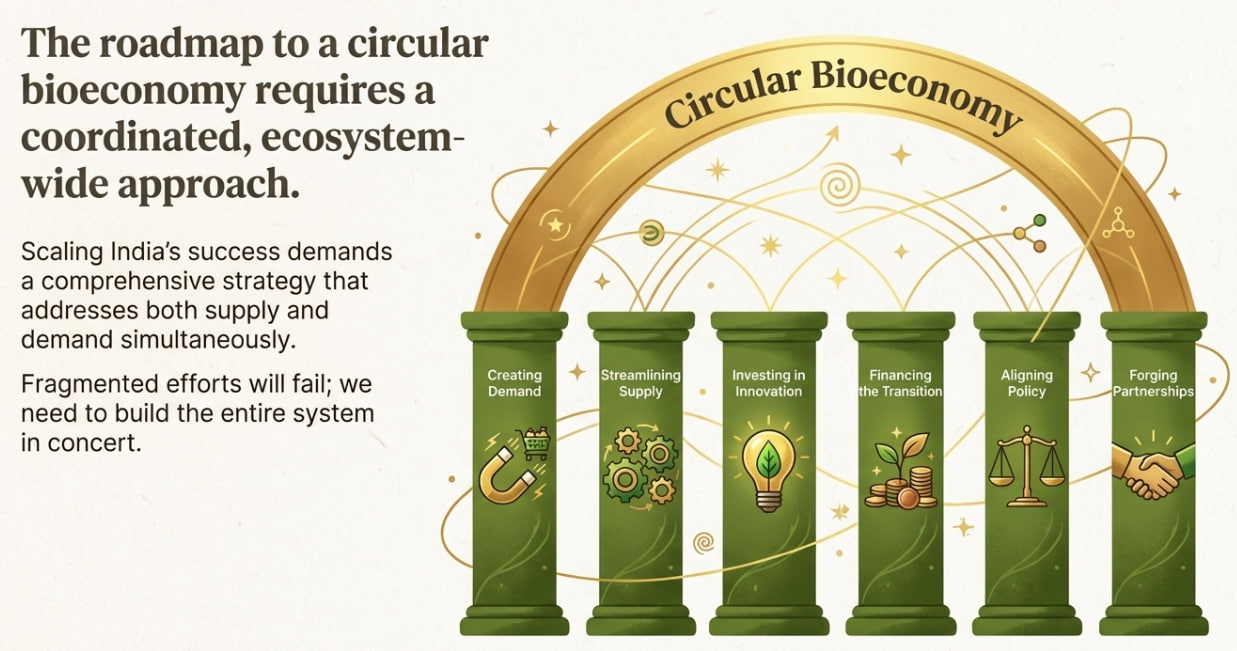
Strengthen Biomass Supply Chains: Promote Farmer Producer Organisations (FPOs) and cooperatives to act as local aggregators, supported by viability gap funding.
Develop a Robust Market: Mandate co-firing of biomass in thermal power plants and create a formal market for biochar and other bioproducts, linking them to carbon credits.
Provide Targeted Financial Incentives: Link Minimum Support Price (MSP) or provide a direct cash incentive to farmers who verifiably adopt sustainable residue management practices.
Invest in R&D: Focus on developing cost-effective, scalable technologies for both in-situ and ex-situ processing at the village or block level.
 Conclusion
Converting crop residue from a pollutant to a resource requires overcoming challenges in governance, market design, and economic alignment, not just technology. Rewarding farmers financially for sustainable residue management can simultaneously alleviate rural distress, boost energy security, improve public health, and advance Net Zero 2070 goal.
Source: THEHINDUBUSINESSLINE
|
PRACTICE QUESTION Q. "The transition from crop residue burning to a circular bio-economy is not just an environmental necessity but an economic imperative for India." Discuss 150 words |
According to the Ministry of New and Renewable Energy (MNRE), India generates over 500 million tonnes of crop residue annually. Of this, an estimated 92 million tonnes are burned in fields each year, primarily in North Indian states, to quickly clear land for the next crop cycle.
The main impacts are severe air pollution from greenhouse gases and PM2.5, leading to health crises like respiratory infections; soil degradation due to the loss of essential nutrients and organic carbon; and significant economic losses estimated at $30 billion annually for Punjab, Haryana, and Delhi alone.
The Sustainable Alternative Towards Affordable Transportation (SATAT) scheme, launched in 2018, aims to establish 5,000 Compressed Biogas (CBG) plants. These plants will convert waste like crop residue and cattle dung into clean fuel, promoting a circular economy and reducing reliance on fossil fuels.
© 2026 iasgyan. All right reserved