At the 8th India–Indonesia Joint Commission Meeting in New Delhi, both nations reviewed bilateral ties and explored deeper cooperation in political, defence, maritime, economic, technological, and cultural sectors.
Ancient Cultural and Civilizational Links
Indian merchants and monks reached the Indonesian archipelago by the 1st century CE, initiating long-term contact.
Sanskrit served as the official and religious language for early kingdoms, as evidenced by 4th-century inscriptions.
The Ramayana and Mahabharata continue to shape Indonesian arts and literature, with the Ramayana remaining a major shared cultural epic.
Maritime powers like Srivijaya and Majapahit adopted Indian administrative and religious structures.
Nalanda University hosted Indonesian scholars, while traders exchanged spices and textiles, further cementing civilizational ties.
Establishment of Diplomatic Relations
India and Indonesia established diplomatic relations in 1949.
The 1951 Treaty of Friendship formalizes bilateral cooperation, reflecting shared post-colonial aspirations.
Indonesia supported India during the 1962 conflict with China, though relations experienced strain during the 1965 Indonesian political transition.
Regular high-level exchanges resumed in the post-Cold War period, with both nations recognizing converging strategic interests.
Bandung Conference and Non-Aligned Movement
The Asian-African Conference (1955) convened in Bandung, Indonesia, with Nehru, Sukarno, Nasser, and Zhou Enlai as key architects.
The "Dasa Sila Bandung" (Ten Principles of Bandung) established the ideological foundation for the Non-Aligned Movement (NAM).
India and Indonesia co-found NAM, emphasizing anti-colonialism, anti-racism, and peaceful coexistence as core principles.
The Bandung Spirit continues to inform bilateral relations, with both nations resisting bloc politics during the Cold War.
Comprehensive Strategic Partnership (2018)
Prime Minister Narendra Modi and President Joko Widodo formally elevate ties to a Comprehensive Strategic Partnership during Modi's 2018 visit to Jakarta.
The "Shared Vision on Maritime Cooperation in the Indo-Pacific" is adopted as a foundational document, aligning naval strategies and maritime governance.
Defence cooperation deepens through agreements on training, technology transfer, and joint exercises.
The bilateral trade target is revised upward to $50 billion, reflecting ambitious economic goals.
Strengthening Ties under the Indo-Pacific Framework
Both nations shape the Indo-Pacific architecture, emphasizing ASEAN centrality and a rules-based order.
India supports Indonesia's ASEAN leadership while Indonesia backs India's Act East Policy and Indo-Pacific Oceans Initiative (IPOI).
The 2023 ASEAN-India Comprehensive Strategic Partnership creates additional institutional platforms for coordination.
 Key Outcomes of the 8th Joint Commission Meeting
Deepen the Comprehensive Strategic Partnership
Leaders elevate bilateral commitments across both traditional security frameworks and emerging non-traditional domains.
Trade and Investment Expansion
Discussions target the structural trade deficit and lay groundwork to surpass the $50 billion bilateral trade target.
Fintech and Digital Connectivity
Both sides explore linking India's Unified Payments Interface (UPI) with Indonesia's QRIS to enable seamless cross-border digital transactions
Expand Multi-Sectoral Trade Architecture
Ministers forge working agreements across high-growth, strategic sectors including fintech, critical minerals, pharmaceuticals, fertilizers, and space technology.
Solidify Maritime & Defense Synergy
Delegations lock in enhanced maritime and shipping cooperation to secure vital trade corridors across the Indo-Pacific.
Integrate Regional Diplomacy
Officials weave India-ASEAN ties deeper into the bilateral agenda, directly countering regional instability.
Fertiliser and Food Security Partnership
India seeks sustainable palm oil supplies and critical raw materials (phosphate and potash) from Indonesia to secure domestic fertilizer production.
Critical Minerals Cooperation
The dialogue advances joint ventures in nickel processing to bypass entrenched Chinese market monopolies.
Anchor of the Act East Policy
Indonesia drives India's Act East Policy; as the largest economy and most populous nation in ASEAN, Jakarta serves as New Delhi's primary diplomatic and market gateway into Southeast Asia.
Mastery Over Maritime Chokepoints
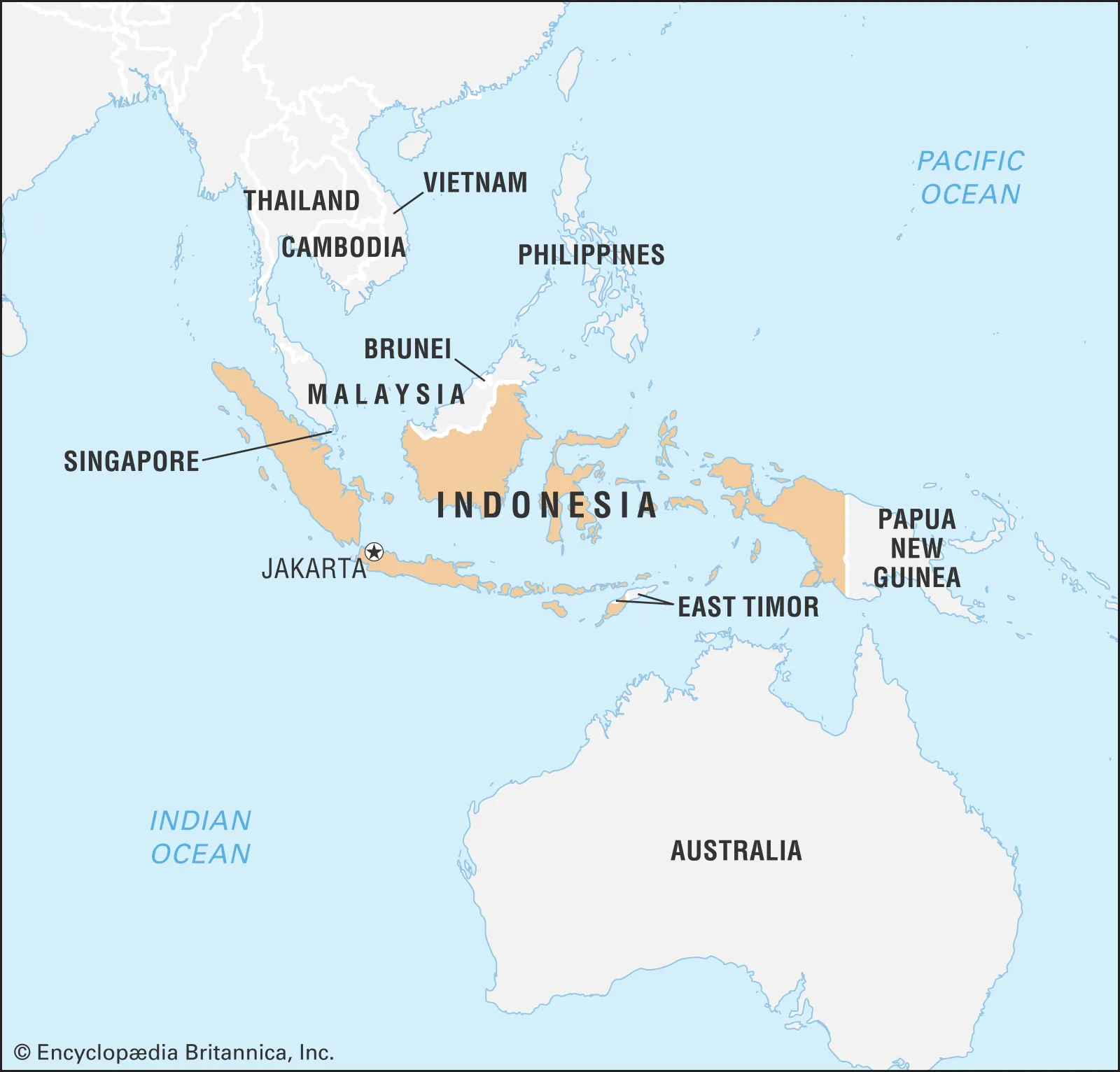
Indonesia physically dominates the Malacca, Sunda, and Lombok Straits. The geographical proximity between Indonesia's Sabang Port (Aceh) and India's Andaman and Nicobar Islands—empowers the Indian Navy to dominate and secure critical Sea Lanes of Communication (SLOCs).
Frontier for Spaceport Diplomacy
India targets the joint development of a near-equatorial spaceport on Biak Island, Papua. Upgrading ISRO's existing tracking station on this island prevents rival powers like China from monopolizing strategic launch assets in the Indo-Pacific.
Critical Minerals Powerhouse
Indonesia controls the world's largest nickel reserves and commands massive global processing capacity. India requires these assets to build out domestic EV battery supply chains and bypass Chinese processing monopolies.
Counterbalance to Maritime Aggression
Both nations advocate a free, open, and rules-based Indo-Pacific governed by UNCLOS. Indonesia's strict resistance to China's illegal Nine-Dash Line claims perfectly aligns with India's pursuit of a multipolar regional architecture.
Maritime Cooperation
Shared Vision on Maritime Cooperation in the Indo-Pacific: The foundational 2018 document establishes five pillars to enforce a rules-based maritime order governed by UNCLOS.
Blue Economy Opportunities: Joint ventures target fisheries, marine biotechnology, and seabed mineral exploration across their massive combined Exclusive Economic Zones (EEZs).
Naval Exercises and Maritime Domain Awareness: Bilateral initiatives like Exercise Samudra Shakti and the White Shipping Information Exchange guarantee operational readiness and real-time threat assessment.
Defence and Security Cooperation
Joint Military Exercises: GARUDA SHAKTI (Special Forces) and SHINYUU MAITRI (Air Force) enhance combat interoperability between the armed forces.
Defence Industry Collaboration: India nears the final contract stages to supply the BrahMos Supersonic Cruise Missile to the Indonesian military.
Counter-Terrorism Cooperation: Intelligence agencies share data on radicalization and terrorist financing through the Joint Working Group on Counter Terrorism.
Cyber Security and Emerging Threats: Defence dialogues elevate 5G network security, data protection, and critical digital infrastructure resilience as shared priorities.
Economic and Trade Relations
Bilateral Trade Trends: Indonesia is India’s second-largest trading partner in the ASEAN region (after Singapore), with bilateral merchandise trade exceeding US$28 billion.
Palm Oil Trade: Indonesia dominates the market by supplying nearly 50% of India's palm oil.
Coal and Energy Cooperation: India relies on Indonesian thermal coal as its primary energy import, which accounts for 36.9% of total imports.
Digital Economy Collaboration: India shares its globally recognized Digital Public Infrastructure (DPI) blueprint to perfectly align with Indonesia's "Making Indonesia 4.0" strategy.
Structural Trade Deficit
In FY25, India's total bilateral trade with Indonesia was valued at $28.18 billion, resulting in trade deficit of $17.39 billion for India.
Commodity Dependence
Bilateral trade heavily relies on raw materials, as India imports mostly coal, palm oil, and raw minerals, while exporting refined petroleum and machinery.
Connectivity Bottlenecks
Direct maritime and air connectivity remains constrained; most trade routes through Singapore or Malaysia, and the strategic Sabang deep-sea port project remains stalled.
Defence Export Friction
India encounters severe bureaucratic friction and cost competitiveness issues in defence exports, losing ground to large suppliers from Russia, Western nations, and China.
Chinese Economic Dominance
China maintains deep economic penetration in Indonesia with $135 billion in bilateral trade and holds dominance in Indonesia's critical nickel processing sector.
Resource Nationalism
Indonesia enforces strict resource nationalism policies, including raw ore export bans and state-routing mechanisms for commodities, generating acute supply chain volatility for Indian importers.
Regional Market Competition
Both nations compete directly as exporters of agricultural products in third-country markets, limiting complete economic complementarity.
Operationalize Strategic Maritime Assets
Execute the Sabang port agreement to establish a logistics hub at the Malacca Strait's mouth and expand Coordinated Patrols (CORPAT) into the broader eastern Indian Ocean.
Streamline Defence Manufacturing
Streamline defence export procedures and offer attractive financing packages to deliver strategic platforms like BrahMos cruise missiles, Tejas aircraft, and patrol vessels to the Indonesian military.
Diversify Trade Portfolios
Upgrade the Comprehensive Economic Cooperation Agreement (CECA) to dismantle non-tariff barriers and promote high-value exports in pharmaceuticals, IT services, and automotive components.
Secure Critical Mineral Supply Chains
Forge joint ventures in Indonesian mineral processing to bypass Chinese-controlled routes and secure nickel and cobalt supplies for domestic EV battery manufacturing.
Accelerate Equatorial Space Diplomacy
India needs to capitalize on its existing ISRO tracking station and assist Jakarta in building the equatorial Biak Island spaceport to project technological power and counter rival influence in the Indo-Pacific.
India must transform historical civilizational ties with Indonesia into a robust, geo-economic partnership to secure vital supply chains, neutralize Chinese dominance, and anchor a multipolar Indo-Pacific architecture.
Source: THEHINDU
|
PRACTICE QUESTION Q. Consider the following statements regarding Indonesia:
Which of the statements given above is/are correct? A. 1 and 2 only B. 2 and 3 only C. 1 and 3 only D. 1, 2 and 3 Answer: A Explanation: Statement 1 is correct: Indonesia is universally recognized as the world's largest archipelagic state. Statement 2 is correct: The Equator passes directly through the Indonesian archipelago, crossing major islands like Sumatra, Borneo (Kalimantan), and Sulawesi. Statement 3 is incorrect: Indonesia does not lie entirely within Southeast Asia; it is a transcontinental country that spans both Southeast Asia and Oceania. Its easternmost provinces (such as Papua and Highland Papua on the island of New Guinea) are geographically located in the Oceania region. |
Indonesia is vital to India because it stands as India's largest trading partner in the ASEAN region, sits right at the mouth of the world's most critical maritime chokepoints, and serves as a major geopolitical anchor in the Indo-Pacific.
Indonesia acts as the primary maritime anchor for India's Act East Policy by facilitating deeper economic integration, direct flight connectivity, and joint strategic development across Southeast Asia.
The Malacca Strait is a critical global chokepoint because over 60,000 ships pass through it annually, carrying nearly one-quarter of the world’s maritime trade and the majority of energy supplies bound for Asia.
The countries cooperate through regular "Samudra Shakti" bilateral naval exercises, coordinated sea patrols in the Andaman Sea, and ongoing talks for potential Indian defense exports like BrahMos missiles.
© 2026 iasgyan. All right reserved