

During the State Visit of the Vietnamese President to India from May 5 to May 7, 2026, the two nations elevated their bilateral relations to an "Enhanced Comprehensive Strategic Partnership".
Vietnam officially joined the India-led Indo-Pacific Oceans Initiative (IPOI) to promote maritime security and a rules-based order in the region.
Both governments have established a new, ambitious bilateral trade target of $25 billion to be achieved by 2030.
Mutual market access was granted for Indian grapes and Vietnamese durians.
A Memorandum of Understanding (MoU) signed between the Reserve Bank of India (RBI) and the State Bank of Vietnam to promote the linkage of retail payment platforms via QR codes to facilitate transactions for tourists and businesses.
A MoU was signed between IREL (India) Limited and Vietnam's Institute for Technology of Radioactive and Rare Elements (VINATOM) to secure supply chains and reduce dependencies.
Signing of the Cultural Exchange Programme for 2026–2030 and an MoU establishing a sister-city partnership between Mumbai and Ho Chi Minh City.
Relationship traces its roots back to the shared anti-colonial struggles, marked by historical bonds between leaders like Mahatma Gandhi and Ho Chi Minh.
India established full diplomatic relations with a unified Vietnam in 1972, consistently backed Vietnam through international isolation and the 1979 China conflict.
Following India's economic liberalization in 1992, Vietnam became a focal point of India's "Look East Policy," which shifted the relationship from purely ideological alignments to strategic and economic cooperation.
The ties were elevated to a Strategic Partnership in 2007, upgraded to a Comprehensive Strategic Partnership in 2016, and in 2026, enhanced to an Elevated Comprehensive Strategic Partnership to deepen defense, trade, and digital ties.
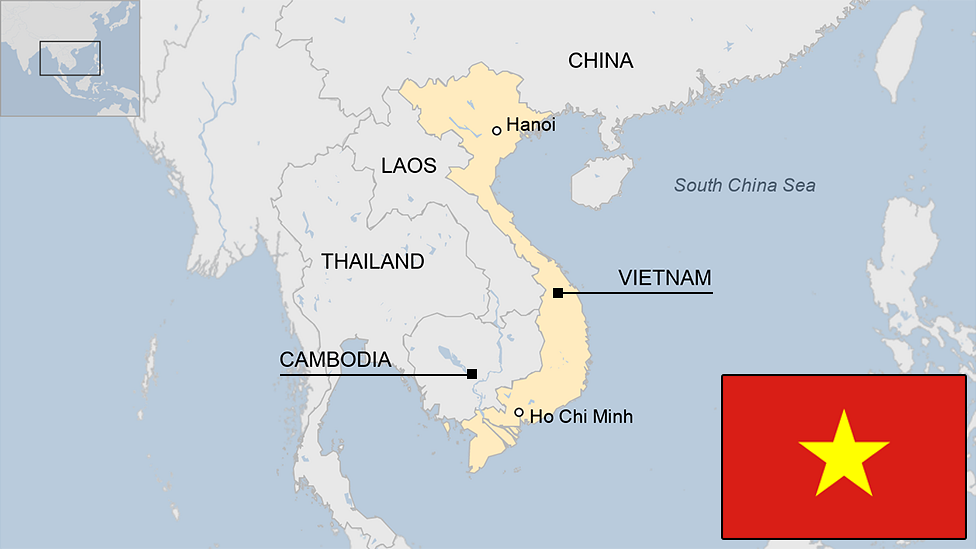 Why is VIETNAM important to India?
Strategic Anchor in the Indo-Pacific: Pillar of India's "Act East Policy," allowing strategic presence in the South China Sea and ensuring the broader Indo-Pacific remains free and open.
Gateway to ASEAN: Strong partnership with Vietnam serves as a bridge for India to deepen its economic, cultural, and strategic engagement with the entire 11-nation ASEAN bloc.
Trusted Defense Partner: Vietnam is India's most trusted defense partner in Southeast Asia, provides India operational experience, a market to export military hardware.
Energy Security: South China Sea hosts abundant oil and gas reserves, and offshore energy projects with Vietnam help India secure resources to offset its high oil import dependence.
Voice of the Global South: As two of the world's fastest-growing economies, India and Vietnam use their partnership to advocate the interests of developing nations and promote multilateralism at the UN.
Indo-Pacific Integration: India has rebranded its "Act East" framework to "Act Indo-Pacific," formally integrating Vietnam into a vision centered on regional security and economic cohesion.
Defense Capacity Building: India is supporting Vietnam's military modernization through defense credit lines, including a recent $300 million agreement.
Asserting Maritime Rights: India advocates for "maritime multilateralism," supporting UNCLOS-based freedom of navigation and commerce in the South China Sea to counter regional hegemony.
Economic & Digital Ties: India aims to deepen economic integration with Vietnam, targeting $25 billion in bilateral trade by 2030.
Local Development: India provides direct assistance through Quick Impact Projects completed across Vietnamese provinces.
Cultural Diplomacy: India utilizes its Buddhist heritage and initiatives like Yoga promotion to strengthen civilizational links and public goodwill.
The China Factor: China's aggressive territorial claims in the South China Sea threaten India's offshore oil exploration efforts, and Beijing views India-Vietnam cooperation as a political provocation.
Economic Dependency on China: China remains Vietnam's largest trading partner and investor.
Logistical and Connectivity Gaps: The absence of robust direct shipping lines and efficient direct air connectivity raises logistics costs and hampers trade competitiveness.
Untapped Trade Potential & Deficit: Bilateral trade remains well below its actual potential, with Indian exports trailing behind Vietnamese exports, creating a trade deficit.
Trade Constraints: Uneven tariff coverage and complex technical standards within the ASEAN-India Trade in Goods Agreement increase transaction costs.
Defense Export Hurdles: Global competition and bureaucratic delays have hindered Indian arms transfers, such as the BrahMos missile.
Institutionalize High-Level Dialogues: Establish a Joint Strategic Vision Committee at the foreign minister level with quarterly reviews to sustain political momentum beyond multilateral summits.
Expedite Advanced Defense Transfers: Finalize the transfer of the BrahMos supersonic cruise missile system and offer Made-in-India defense platforms to reduce Vietnam's reliance on Russian hardware.
Enhance Physical Connectivity: Develop direct shipping lines between Indian ports (like Chennai or Vishakhapatnam) and Vietnamese ports (like Ho Chi Minh City or Da Nang), while expanding direct flight routes.
Deepen Energy Exploration: Expand joint oil and gas exploration in Vietnam's exclusive economic zone to safeguard mutual energy security despite geopolitical pushback.
Promote Supply Chain Diversification: Encourage Indian companies in manufacturing, textiles, and electronics to set up operations in Vietnam as part of broader "China+1" diversification strategies.
Expand Digital and Fintech Linkages: Utilise recent agreements to link India's UPI with Vietnam's NAPAS to ensure seamless cross-border QR code payments and create a digital corridor for e-commerce.
Increase Joint Naval Deployments: Expand the scope and frequency of joint naval exercises (like VINBAX) and white shipping agreements in the South China Sea to signal a shared commitment to freedom of navigation.
Strengthen People-to-People Ties: Increase scholarships for Vietnamese students in STEM and medicine, establish reciprocal Cultural Centers, and expand joint archaeological restoration projects like the My Son complex.
The India-Vietnam Enhanced Comprehensive Strategic Partnership serves as a vital democratic anchor for peace, supply chain resilience, and maritime security in the Indo-Pacific region.
Source: PIB
|
PRACTICE QUESTION Q. Soft power remains a crucial pillar of India's Act East Policy. Discuss. 150 words |
The most significant outcome was the elevation of bilateral ties to an "Enhanced Comprehensive Strategic Partnership" during the Vietnamese President's State Visit to India in May 2026.
To enhance economic cooperation, both governments established an ambitious new bilateral trade goal of $25 billion to be achieved by the year 2030.
Vietnam officially agreed to join the Indo-Pacific Oceans Initiative (IPOI) led by India. Both nations reaffirmed their commitment to freedom of navigation in the South China Sea in accordance with UNCLOS 1982.
© 2026 iasgyan. All right reserved