

Copyright infringement not intended
Picture Courtesy: livemint
UAE President Sheikh Mohamed bin Zayed Al Nahyan visited India on January 19, 2026, for a three-hour substantive visit that yielded key cooperation agreements.
|
Read all about: INDIA AND UNITED ARAB EMIRATES (UAE) RELATION l INDIA UAE BILATERAL TRADE l UAE-INDIA AVIATION PARTNERSHIP l JAISHANKAR'S UAE VISIT BOOST TIES |
Trade and Economy
Trade Doubling Target: Both nations set a goal to double bilateral trade from $100 billion to $200 billion by 2032.
MSME Integration: Connect Micro, Small, and Medium Enterprises (MSMEs) through initiatives like Bharat Mart, a Virtual Trade Corridor, and the Bharat-Africa Setu.
Financial Services Expansion: First Abu Dhabi Bank (FAB) and DP World will establish operations in GIFT City, Gujarat, to enhance financial and maritime services.
Energy and Technology
10-Year LNG Deal: A long-term agreement was signed for ADNOC Gas to supply 0.5 million tonnes of LNG annually to India’s HPCL starting in 2028.
Civil Nuclear Cooperation: Following SHANTI Act 2025, the two countries will collaborate on advanced nuclear technologies, including Small Modular Reactors (SMRs).
Supercomputing & AI: Plans were finalized to establish a supercomputing cluster in India and collaborate on Artificial Intelligence (AI) and emerging technologies.
Digital Embassies: Both sides agreed to explore setting up "Digital/Data Embassies" to ensure digital sovereignty and secure data storage.
Strategic and Defense Partnership
Strategic Defence Partnership: A Letter of Intent (LoI) was signed to create a framework for defense industry collaboration, joint training, and cybersecurity.
Space Sector: An agreement was reached to develop an integrated space ecosystem, including joint missions and commercialization of space technologies.
Infrastructure and Culture
Dholera SIR Development: The UAE’s Ministry of Investment and the Government of Gujarat signed an LoI for the development of the Dholera Special Investment Region (SIR), including an international airport and greenfield port.
'House of India' in Abu Dhabi: Agreed in principle to establish a cultural center and museum showcasing Indian art, heritage, and archaeology in Abu Dhabi.
Academic Integration: An understanding was reached to integrate India's DigiLocker with UAE platforms for seamless authentication of academic degrees.
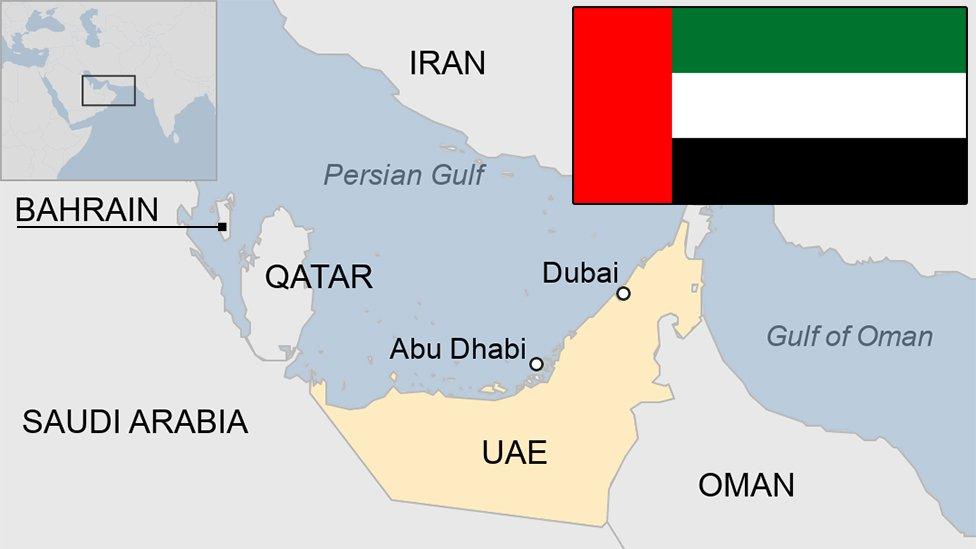 Evolution of India-UAE Relations
Phase I: Historical & Mercantile Era (Pre-1971)
For centuries, the Arabian Sea strengthened active trade between India and the Trucial States (now the UAE), exchanging spices, textiles, and pearls. The Indian Rupee was the region's unofficial currency until 1966, showing deep economic ties.
Phase II: The Transactional Era (1971–2014)
After the formation of the UAE in 1971, the relationship was driven by India's need for crude oil and the UAE's requirement for Indian migrant labor to build its modern infrastructure.
Phase III: The Strategic Realignment (2015–Present)
This period marks a "Golden Era." A high-level visit in 2015, after a 34-year gap, initiated a paradigm shift.
The relationship was elevated to a 'Comprehensive Strategic Partnership' in 2017, moving beyond buyer-seller dynamics to collaboration in defense, technology, and global forums.
Geopolitically, the UAE de-hyphenated its view of India from Pakistan, notably inviting India as the 'Guest of Honour' to the Organisation of Islamic Cooperation (OIC) in 2019.
Economic Powerhouse
Trade Partner: The UAE is India's third-largest trading partner and second-largest export destination. Bilateral trade crossed the $100 billion mark in FY 2024-25. (Source: PIB)
Investment Hub: The UAE is the seventh-largest foreign investor in India, with a cumulative FDI of $22.84 billion between April 2000 and March 2025. (Source: DPIIT)
Gateway to the World: The 'Bharat Mart' in Dubai's Jebel Ali Free Zone will enhance the UAE's role as a vital distribution hub for Indian MSMEs accessing markets in the Middle East, Africa, and Europe.
Energy Security
Oil and Gas Supplier: The UAE is the fourth-largest source of crude oil and the second-largest source for LNG and LPG. (Source: PIB)
Strategic Reserves: It is the only country that has agreed to store its crude oil in India's Strategic Petroleum Reserves, highlighting deep trust.
Indian Diaspora
Approximately 4.3 million Indians live and work in the UAE, forming the largest ethnic group in the country. (Source: MEA)
They are a vital source of foreign remittances, boosting India's foreign exchange reserves. In FY24, the UAE provided 19.2% of India's total remittance inflows. (Source: RBI).
Economic Diversification
As the UAE diversifies its economy away from oil, India, with its large and rapidly growing market, offers immense opportunities for investment and trade in non-oil sectors.
Human Resources
Indian professionals and laborers have been vital in developing and sustaining the UAE's economy across construction, services, technology, and finance.
Food Security
India is a key partner for the UAE's food security needs, being a major exporter of food items and agricultural products.
Regional Stability
A strong and stable India is seen by the UAE as a crucial partner for ensuring regional security and stability in the Indian Ocean and beyond. The UAE views India as a primary partner for maritime security.
Economic & Trade
Comprehensive Economic Partnership Agreement (CEPA): Signed in 2022, to boost non-oil trade to $100 billion by 2030.
Bilateral Investment Treaty (BIT): Signed in 2024, it strengthens investment flows between the two nations.
Fintech & Digital Payments: Successful integration of India's UPI with UAE's AANI, and RuPay card with UAE's JAYWAN, facilitating seamless cross-border transactions.
Local Currency Settlement System (LCSS): An agreement to promote trade settlement in Indian Rupees (INR) and UAE Dirhams (AED).
Defence & Security
Strategic Defence Partnership: A Letter of Intent was signed in January 2026 to formalize a partnership covering defense manufacturing, technology transfer, and cybersecurity.
Joint Military Exercises: Regular exercises like 'Desert Eagle' (Air Force) and 'Desert Cyclone' (Army) enhance interoperability.
Counter-Terrorism: Strong collaboration in intelligence sharing and combating extremism.
Technology & Space
Space Cooperation: A shift from a buyer-seller model to co-development. IN-SPACe (India) and the UAE Space Agency are collaborating to develop a joint space ecosystem.
Artificial Intelligence (AI): Collaboration on establishing a supercomputing cluster and data centers in India.
Multilateral Cooperation
I2U2 Group: A key partnership involving India, Israel, UAE, and the USA, focusing on joint investments in water, energy, transportation, space, health, and food security.
India-Middle East-Europe Economic Corridor (IMEC): The UAE is a critical node in this ambitious connectivity project, positioning it as India's gateway to Europe.
Both nations also cooperate in forums like BRICS and the UN.
Structural Trade Imbalance: India runs a trade deficit with the UAE, largely due to heavy energy imports. Diversifying India's export basket is a key challenge.
Geopolitical Volatility: The stability of connectivity projects like IMEC is vulnerable to regional conflicts in West Asia, which can create strategic bottlenecks.
Diaspora-Related Issues: The UAE's "Emiratisation" policy, favoring national employment, could challenge the large Indian workforce, particularly in white-collar sectors, long-term.
Investment Execution Gaps: Bureaucratic hurdles often cause delays in the actual deployment of large investment pledges from the UAE to India.
Balancing Regional Relations: India must balance strong UAE ties with relationships with regional powers like Iran and Saudi Arabia.
Strengthening Bilateral Trade: Both nations have set a new, ambitious target to double bilateral trade to $200 billion by 2032.
Deepening Defence Industrial Cooperation: Moving beyond joint exercises to co-production and co-development of defence equipment, leveraging each other's technological and manufacturing strengths.
Green Energy Partnership: Collaborating on a "Green Hydrogen Grid" by combining India's production capacity with UAE's investment and logistics infrastructure to supply clean energy to the world.
Enhancing Digital Integration: Moving beyond payment systems to create a "Cross-Border Digital Commons" by integrating digital health records, credit histories, and educational credentials for seamless mobility.
Operationalizing Connectivity Corridors: Accelerating the implementation of projects like IMEC and strengthening the 'Virtual Trade Corridor' to slash logistics costs and secure trade routes.
The India-UAE relationship has shifted from a focus on energy and labor to a strategic partnership. This new emphasis on technology, co-creation, and shared geopolitical realism enables both nations to meet bilateral goals and shape the economic and security architecture of South and West Asia through joint infrastructure, and stronger defense ties.
Source: livemint
|
PRACTICE QUESTION Q. Analyze the significance of the India-UAE-Europe Economic Corridor (IMEC) for India’s strategic autonomy and regional connectivity. (150 words) |
Trade between India and the UAE reached $100 billion in the 2024-25 fiscal year, and the two countries have set a new goal to double this bilateral trade volume to $200 billion by 2032.
The Comprehensive Economic Partnership Agreement (CEPA), a free trade pact signed between India and the UAE in 2022 after a swift 88-day negotiation, has significantly boosted economic expansion and non-oil trade by providing zero-duty market access for various goods.
The UAE is India's fourth-largest supplier of crude oil and a major source of LNG and LPG. Beyond a simple buyer-seller relationship, the Abu Dhabi National Oil Company (ADNOC) has invested in India's Strategic Petroleum Reserve in Mangalore, solidifying a deep and reliable energy partnership.
© 2026 iasgyan. All right reserved