

The 12th round of India-Turkiye Foreign Office Consultations held on April 8, 2026, signals a potential thaw in diplomatic relations following tensions over military support to Pakistan during the 2025 "Operation Sindoor" conflict.
Historical Foundation (Pre-1947)
Diplomatic missions between the Ottoman Sultans and the Indian subcontinent date back to 1481-82.
During the First Balkan War (1912–13), an Indian medical mission led by Dr. M.A. Ansari supported Ottoman soldiers.
Establishment of Ties (1947–1990)
Türkiye recognized India in 1947, and formal diplomatic relations were established in 1948. However, ties remained "frosty" during the Cold War as Türkiye joined NATO while India led the Non-Aligned Movement.
Post-Cold War Thaw (1990s–2018)
Relations improved with the end of the Cold War, highlighted by Prime Minister Atal Bihari Vajpayee’s visit in 2003 and Prime Minister Narendra Modi's G20 visit in 2015.
Recent Strains (2019–2025)
Relations deteriorated following Türkiye’s criticism of India's Article 370 abrogation in 2019.
Tensions peaked during the 2025 India-Pakistan conflict (Operation Sindoor), where Türkiye provided military and diplomatic support to Pakistan.
 Why is Türkiye Important to India?
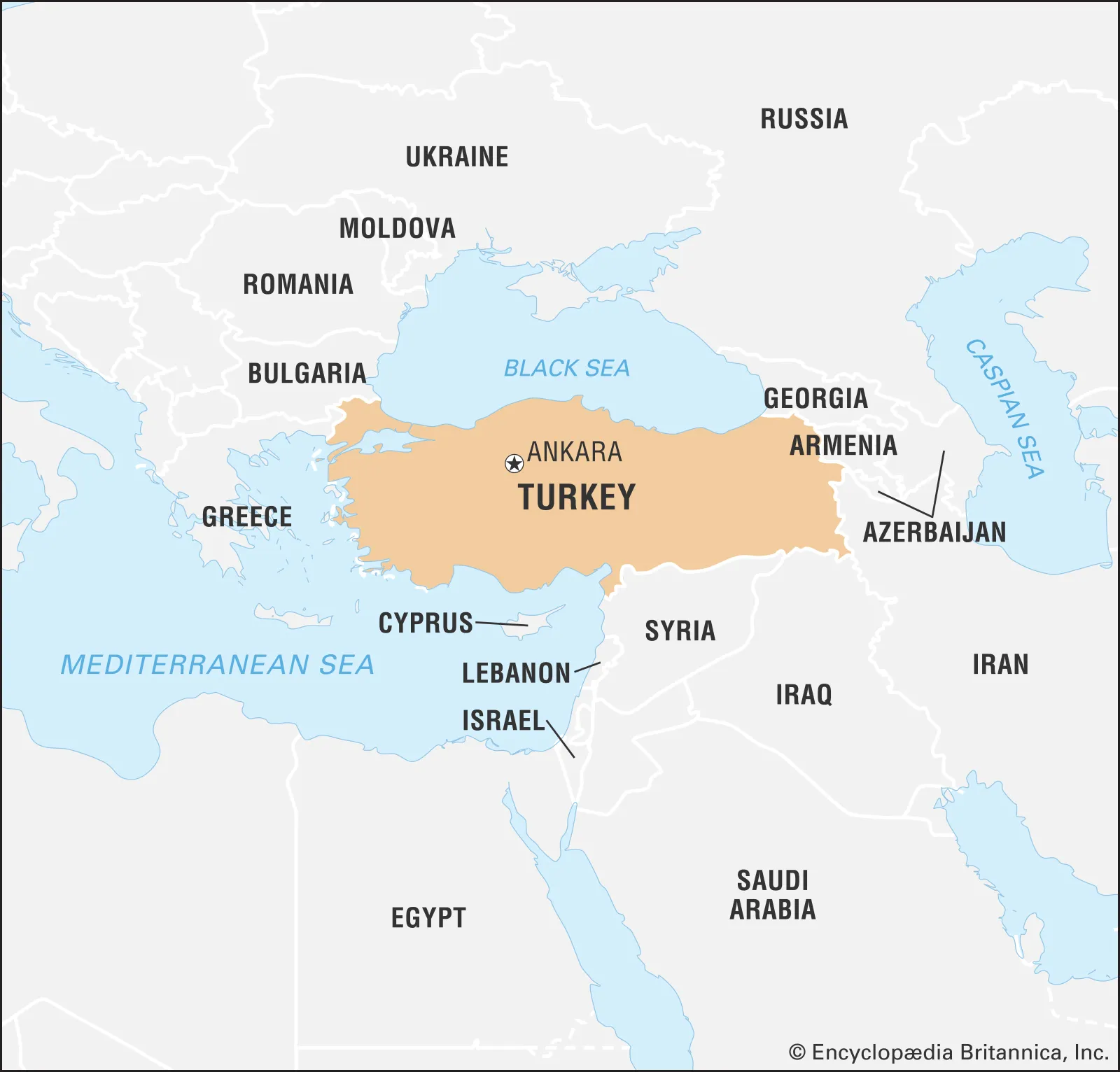
Strategic Connectivity: Türkiye sits at the crossroads of Europe, Asia, and the Middle East, making it a vital link for the International North-South Transport Corridor (INSTC) to boost trade with Central Asia.
Economic Hub: It serves as a manufacturing and logistics base for Indian companies looking to access markets in the European Union, Black Sea, and West Asia.
Trade Complementarity: Despite political friction, bilateral trade reached $8.71 billion in FY 25. (Source: IBEF)
Regional Influence: As an influential player in the Middle East and Central Asia, Türkiye can help India navigate regional instabilities and participate in development corridors like the Lapis Lazuli Corridor.
Multilateral Cooperation: Both are members of the G20, where they collaborate on global economic governance and have shared interests in UN Security Council (UNSC) reforms.
Market Opportunity: India is Türkiye’s second-largest market after China, with trade volumes far surpassing Türkiye's trade with Pakistan
Production Base: Turkish firms view India as a potential production base in Asia to tap into its manufacturing ambitions and participate in large-scale infrastructure projects.
Infrastructure Expertise: Türkiye seeks to leverage its construction sector's global reputation by participating in India’s "Smart Cities" and logistics initiatives.
Strategic Balancing: For Türkiye, India is a key partner in a multipolar world, providing a counterbalance in global forums like the G20 where both countries seek UN Security Council reforms.
Tourism & Culture: India is a top source of high-spending tourists and a popular destination for Indian destination weddings, contributing significantly to the Turkish tourism economy.
Reciprocity in Diplomacy: India has adopted a policy of strategic recalibration, engaging more deeply with Türkiye’s rivals—such as Greece, Cyprus, and Armenia—as a direct response to Ankara’s vocal support for Pakistan’s stance on Kashmir.
Firmness on Sovereignty: India frequently urges Türkiye to refrain from interfering in internal matters, specifically regarding Jammu & Kashmir, calling past statements "factually incorrect and unwarranted".
Separating Trade from Politics: Despite political friction, India maintains a pragmatic trade policy, allowing bilateral trade to cross $8 billion in recent years.
Humanitarian Diplomacy: Through initiatives like Operation Dost in 2023, India uses soft power and humanitarian aid to build public goodwill and keep channels of communication open even during diplomatic lows.
Strategic Thaw (2026): The recent 12th round of Foreign Office Consultations indicates a shift toward a thaw, focusing on functional areas like technology, energy, and counter-terrorism to "breathe new life" into the relationship.
The Pakistan Factor: Türkiye’s "all-weather" support for Pakistan, particularly its military assistance and supply of drones/defense equipment, is a major source of friction for New Delhi.
Kashmir Position: President Erdogan’s frequent references to Jammu & Kashmir at the UN General Assembly are viewed by India as "gross interference" in its internal affairs.
Strategic Divergence: Türkiye’s role in the Organization of Islamic Cooperation (OIC) clashes with India’s interests, as the group frequently issues statements critical of India.
Defense Concerns: India has raised alarms regarding Türkiye’s supply of advanced military hardware to Pakistan, which India views as an attempt to alter the regional security balance.
Economic Volatility: Fluctuations in the Turkish Lira and occasional calls for boycotts on social media have led to temporary drops in bilateral trade and tourism.
India’s Counter-Balancing: In response to Ankara's stance, India has strengthened strategic ties with Greece, Cyprus, and Armenia, creating a "tit-for-tat" diplomatic environment.
Institutionalizing Dialogue: Regularizing the Foreign Office Consultations (FoC) to ensure high-level engagement does not lapse for years at a time. The agreement to hold the 13th round in Türkiye on a priority basis is a step toward making the dialogue "predictable".
Broadening Economic Engagement: Both nations aim to "breathe new life" into ties by increasing bilateral trade from the current $8 billion to a target of $20 billion by 2030.
Strategic De-hyphenation: Strengthening ties by treating bilateral relations independently of third-country factors, such as the "Pakistan factor," and focusing on mutual interests in technology, energy, and innovation.
Joint Counter-Terrorism Efforts: Deepening cooperation in the "fight against cross-border terrorism," an area identified as a priority during the April 2026 talks in New Delhi.
Science and Space Research: Resuming and expanding joint projects in space research, biotechnology, and nanotechnology, building on past successes like the launch of the ITUpSAT1 satellite via ISRO.
Leveraging Trade Synergies: Capitalizing on the India-EU Free Trade Agreement (2026) to turn Türkiye into a "near-shoring" hub for Indian textiles and pharmaceuticals entering the European market.
Enhancing Cultural & People-to-People Ties: Revitalizing tourism—which saw a 36% dip in 2025—and promoting educational exchanges to improve mutual public perception. (Source: The Hindu)
Conclusion
India-Turkiye relations are entering a "transformative phase" in 2026 toward a "realistic and mature partnership," driven by economic synergy and geography, requiring continued engagement despite historical mistrust and divergent security views.
Source: THEHINDU
|
PRACTICE QUESTION Q. Discuss the concept of 'Strategic Compartmentalization' in Indian foreign policy. 150 words |
Relations soured primarily due to ideological friction. Under President Erdogan, Turkiye frequently raised the Kashmir issue at international forums like the UNGA. The relationship hit rock bottom during the 2025 'Operation Sindoor', when Turkiye provided diplomatic and military support (including drones) to Pakistan.
'Operation Sindoor' refers to a 2025 India-Pakistan conflict. During this crisis, Turkiye, alongside Azerbaijan, explicitly backed Pakistan and provided military drone technology, which crossed India's strategic red lines and led India to exclude Turkiye from official diplomatic briefings.
It is a diplomatic approach where countries separate their political and ideological disputes from their economic and transactional interests. For India and Turkiye, it means focusing on trade, connectivity, and energy cooperation while strictly managing differences over Pakistan and Kashmir.
© 2026 iasgyan. All right reserved