

Prime Minister Narendra Modi’s July 2026 State Visit to Indonesia marks a watershed moment in bilateral diplomacy.
The India-Indonesia Strategic Partnership is a multi-dimensional geopolitical framework bridging the Indian and Pacific Oceans, integrating advanced defence, maritime awareness, resilient supply chains, and digital public infrastructure to maintain a multipolar Asia.
Background
Civilisational Roots: Deep historical linkages span over 1,600 years, rooted in Hindu-Buddhist philosophies, Sanskrit language, and maritime trade.
Post-Colonial Solidarity: Diplomatic relations established in 1950, codified by the 1951 Treaty of Friendship. Both nations architected the 1955 Bandung Conference and the Non-Aligned Movement (NAM).
Policy Elevation: Upgraded to a Strategic Partnership in 2005 and elevated to a Comprehensive Strategic Partnership (CSP) in 2018 aligned with India's Act East Policy.
 Why are India and Indonesia Important Strategic Partners?
Maritime Neighbours in the Indo-Pacific
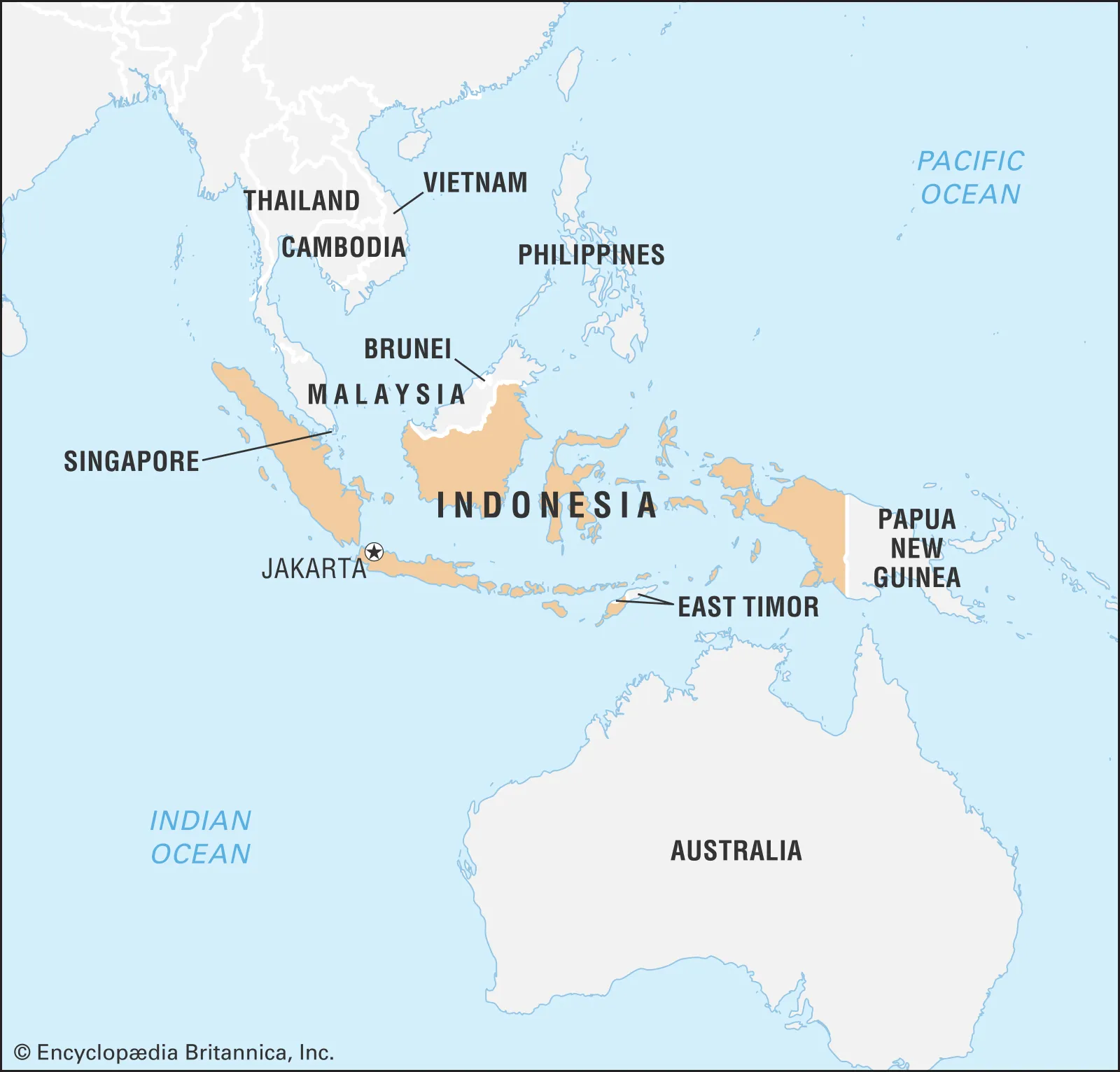
India's Andaman and Nicobar Islands lie just 150 kilometres away from Indonesia's Aceh province, creating a shared maritime destiny.
Two of the World's Largest Democracies
Representing nearly one-fifth of humanity, both nations validate that extreme diversity strengthens democratic institutions and drives economic resilience.
Shared Commitment to ASEAN Centrality
Indonesia acts as the geopolitical fulcrum of Southeast Asia. Its leadership ensures that the ASEAN Outlook on the Indo-Pacific (AOIP) synergises effectively with India's strategic goals.
Converging Interests in Maritime Security
Both nations face non-traditional threats like IUU (Illegal, Unreported, and Unregulated) fishing, piracy, and maritime terrorism, making joint operations like IND-INDO CORPAT essential.
Strong Civilisational and Cultural Linkages
Shared heritage thrives through narratives of the Ramayana and Mahabharata, and architectural marvels. The Prambanan Temple and Bali Yatra reflect continuous cultural cross-pollination.
Expansion of Defence Cooperation
Transitioned bilateral engagement directly into military-industrial integration, focusing on joint production, Technology Transfer (ToT), and establishment of Maintenance, Repair, and Overhaul (MRO) facilities.
BrahMos and Astra Missile Cooperation
Supersonic Precision: Signed a contract estimated at $630 million for India to supply two batteries of the BrahMos cruise missile system to the Indonesian military.
Air-to-Air Superiority: Bharat Dynamics Limited (BDL) will integrate the indigenous Astra Mk-1 Beyond-Visual-Range (BVR) missile onto Indonesia's Su-30 fighter jets.
Maritime Security Partnership
Intelligence Sharing: Indonesia stationed an International Liaison Officer (ILO) at India’s Information Fusion Centre-Indian Ocean Region (IFC-IOR) in Gurugram to track real-time shipping threats.
Coast Guard Synergy: Renewed the MoU between the Indian Coast Guard and Indonesia's BAKAMLA to strengthen search and rescue and pollution control.
Critical Minerals and Supply Chain Cooperation
Rare Earth Magnet Development: Signed a tripartite MoU between India's NFTDC, Midwest Ltd., and Indonesia’s PT PERMINAS to develop resilient critical mineral supply chains.
Steel Joint Venture: Steel Authority of India Limited (SAIL) and PT Krakatau Steel formed a strategic JV to establish a stainless-steel slab manufacturing facility in Indonesia.
Space and Technology Collaboration
Gaganyaan Support: Extended the ISRO-BRIN framework, allowing India to utilise Indonesia's Biak Telemetry, Tracking and Command (TTC) facility for human spaceflight missions.
Digital Public Infrastructure: Launched the Indonesia Open Network (ION) modeled on India's ONDC to empower Indonesian MSMEs.
Gateway to Southeast Asia
Indonesia forms the physical bridge between the Indian and Pacific Oceans, anchoring India's strategic presence in the broader region.
Control of Key Maritime Chokepoints
Indonesia oversees the Strait of Malacca, Sunda Strait, and Lombok Strait—arteries handling over one-third of total global trade and the majority of East Asia's energy imports.
Support for Act East Policy
As the largest economy in ASEAN, Indonesia's cooperation validates India's eastward economic integration and geopolitical outreach.
Partner in Maritime Domain Awareness
Proximity allows combined tracking of adversarial naval movements (specifically Chinese submarines) entering the Eastern Indian Ocean.
Contributor to Regional Stability
Indonesia's non-aligned posture and "independent and active" foreign policy act as a buffer against aggressive unipolar hegemony in the region.
Defence and Security
Annual bilateral exercises like Garuda Shakti (Army) and Samudra Shakti (Navy). Upgraded counter-terrorism frameworks target terror financing and cyber threats.
Maritime Cooperation
Sabang Deep-Sea Port: Fast-tracking the integrated development of Sabang Port in Aceh, located 700 km from the Andaman islands, to monitor the Malacca Strait.
Trade and Investment
India’s exports to Indonesia were valued at US$5.38 billion in 2024-25, while imports stood at US$22.78 billion, taking total trade to US$28.15 billion. India imports coal and crude palm oil while exporting refined petroleum and engineering goods.
Critical Minerals
Indonesia holds the world's largest Nickel reserves. Securing these resources is vital for India's Electric Vehicle (EV) battery manufacturing ecosystem.
Digital Economy and AI
Integrating India's Unified Payments Interface (UPI) with Indonesia's QRIS system to facilitate seamless cross-border financial transactions (Source: Reserve Bank of India).
Space Cooperation
India assists in launching Indonesian satellites while Indonesia provides equatorial tracking infrastructure for Indian rockets.
Agriculture and Food Security
India exported 100 tonnes of climate-resilient DWR 162 wheat seeds to boost Indonesia's food security matrix.
Cultural and Educational Exchanges
IIM Bangalore will open its first overseas campus at the Singhasari Special Economic Zone (SEZ) in Malang.
Both nations will celebrate 2026-27 as the "Tagore-Dewantara Year" to mark 100 years of Rabindranath Tagore's visit to Indonesia.
Strategic Competition in the Indo-Pacific
Indonesia maintains a delicate balance, hosting heavy Chinese infrastructure investments (like High-Speed Rail) while resisting China's expansive "Nine-Dash Line" claims in the Natuna Sea.
Supply Chain Vulnerabilities
Both nations currently rely heavily on third-party (Chinese) dominance for processing critical minerals and raw materials despite possessing large domestic reserves.
Maritime Security Threats
The vast, porous archipelagic waters face continuous threats from transnational crime syndicates, piracy, and human trafficking.
Regional Geopolitical Uncertainties
ASEAN divisions over the Myanmar crisis and the ongoing militarisation of the South China Sea introduce friction in regional policymaking.
Trade and Connectivity Constraints
Bureaucratic delays and non-tariff barriers impede physical connectivity projects and skew the trade balance heavily in favor of Indonesian raw commodity exports.
Expanding Defence Industrial Collaboration
Move beyond buyer-seller relationships into co-development of naval vessels and indigenous aerospace hardware.
Deepening Maritime Connectivity
Expedite the Andaman-Aceh Connectivity master plan via the 3rd Joint Task Force, launching direct ferry and cargo links.
Strengthening Critical Mineral Supply Chains
Form state-backed consortiums to build end-to-end EV battery manufacturing hubs that process Indonesian Nickel using Indian capital and technology.
Enhancing Blue Economy Cooperation
Undertake joint hydrographic surveys and establish sustainable marine fisheries to combat illegal fishing.
Promoting Digital and AI Partnerships
Export India's Digital Public Infrastructure (DPI) stack globally, using the success of the Indonesia Open Network (ION) as a template for ASEAN.
Expanding Academic and Cultural Exchanges
Liberalise visa regimes for researchers and replicate the IIM Bangalore model with Indian Institutes of Technology (IITs) setting up offshore Indonesian campuses.
Coordinating More Closely in Global South Forums
Leverage Indonesia's inclusion in BRICS and influence in the G20 to secure immediate reforms in global financial institutions and the UN Security Council.
The India-Indonesia Comprehensive Strategic Partnership, propelled by the "Ganga-Mahakam Vision", stands as the bedrock of a free, open, and multipolar Indo-Pacific, driving technological integration and championing the aspirations of the Global South.
Source: PIB
|
PRACTICE QUESTION Q. "The transformation of the India-Indonesia relationship into a Comprehensive Strategic Partnership is critical to maintaining a multipolar Indo-Pacific." Analyze. 150 words |
The Comprehensive Strategic Partnership (CSP) was officially established in 2018 during Prime Minister Narendra Modi's visit to Jakarta. It upgraded the earlier 2005 Strategic Partnership to encompass broader cooperation in high-technology, maritime security, and digital economy sectors.
Indonesia serves as the geographical bridge between the Indian and Pacific Oceans. It controls vital maritime chokepoints like the Malacca, Sunda, and Lombok Straits. Furthermore, as ASEAN's largest economy and a non-aligned leader, Indonesia anchors regional stability and supports India's Act East Policy.
The $630 million agreement to export BrahMos cruise missiles and Astra Mk-1 missiles marks a fundamental shift from a diplomatic partnership to deep military-industrial integration. It boosts India's status as a net security provider and enhances Indonesia's maritime strike capabilities against territorial infringements.
Bilateral maritime cooperation includes the IND-INDO Coordinated Patrols (CORPAT), joint naval exercises like 'Samudra Shakti', and real-time intelligence sharing through the placement of an Indonesian liaison officer at India's IFC-IOR. They are also jointly developing the Sabang deep-sea port to monitor the Malacca Strait.
© 2026 iasgyan. All right reserved