ALL YOU NEED TO KNOW ABOUT VIRUSES
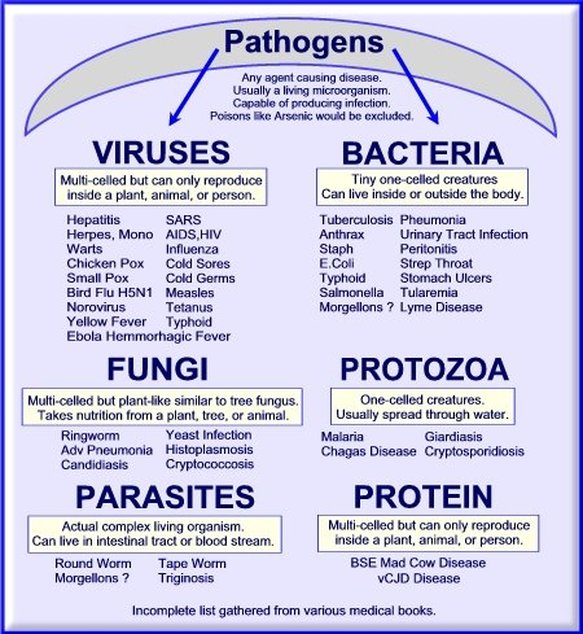
What are Viruses?
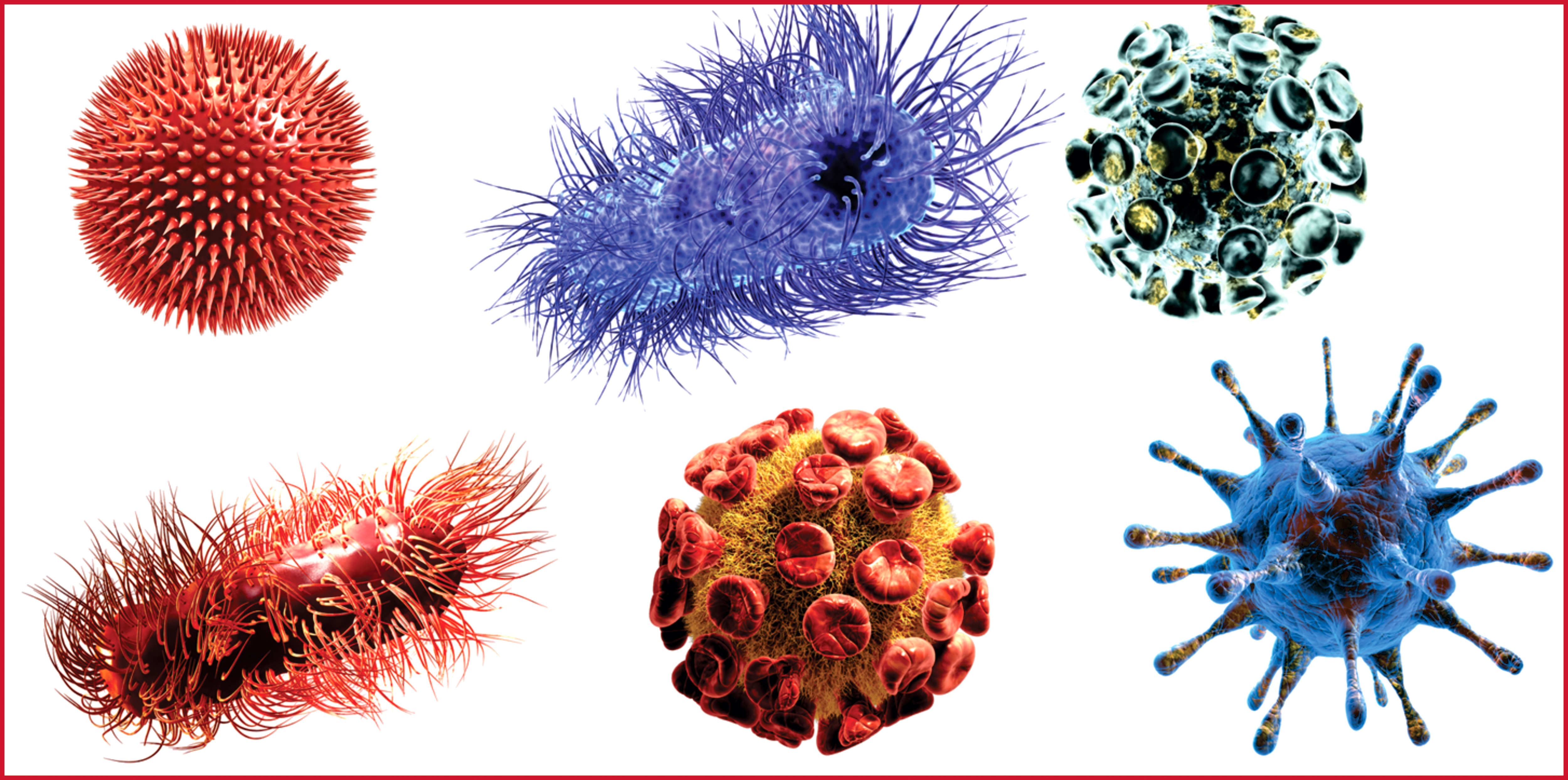
Viruses are the smallest of all the microbes. Viruses are not plants, animals, or bacteria, but they are the quintessential parasites of the living kingdoms. They are unique because they are only alive and able to multiply inside the cells of other living things. The cell they multiply in is called the host cell.
Structure of a Virus
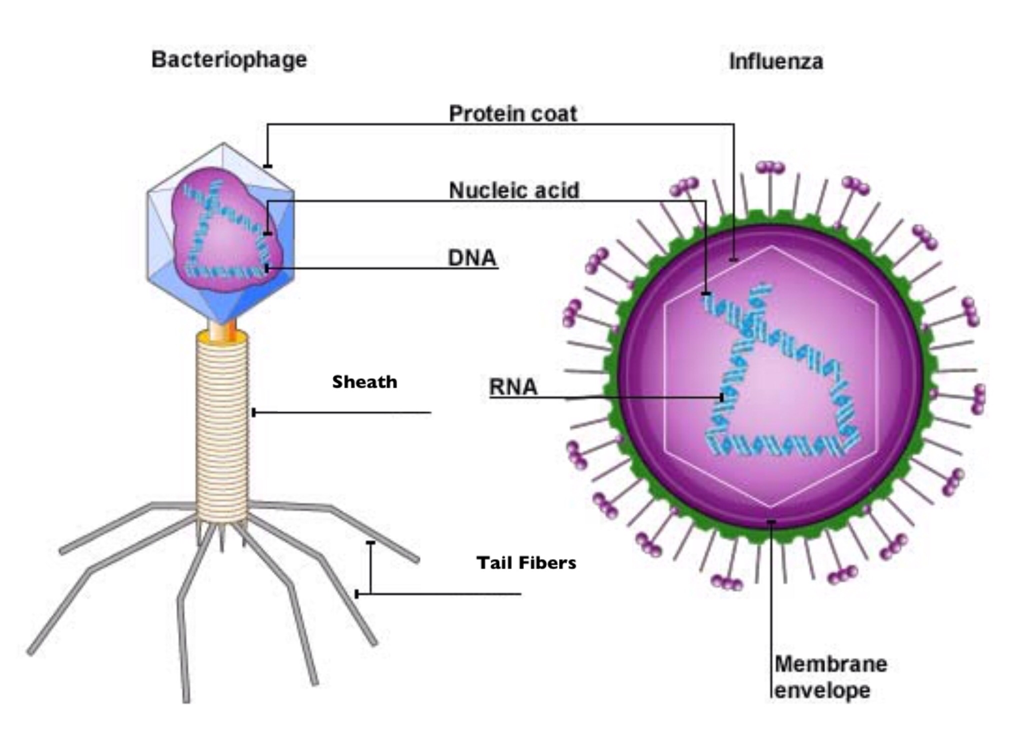
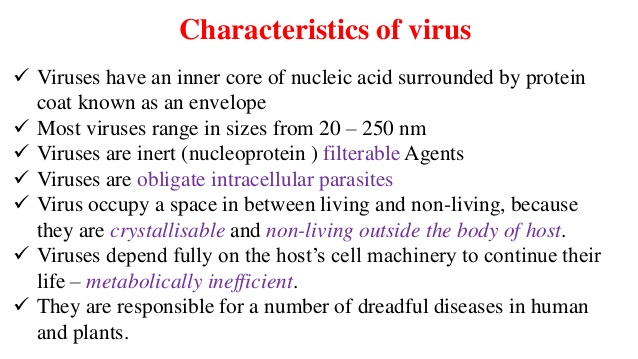
The core of the virus is made up of nucleic acids, which then make up the genetic information in the form of RNA or DNA. The protein layer that surrounds and protects the nucleic acids is called the capsid. Sometimes the capsid is surrounded by an additional spikey coat called the envelope. Viruses are capable of latching onto host cells and getting inside them. When a single virus is in its complete form and has reached full infectivity outside of the cell, it is known as a virion.
In a nutshell,
Viruses vary in their individual structure, but all viruses contain two structures.
Nucleic acid: DNA or RNA
Capsid: a protein coat that gives a virus its shape. It makes up 95% of the virus.
Other structures a virus could have are:
Envelopes: consist of lipids and are found only in some viruses; it is believed to come from the host cell when the virus exits in the cell.
Tail: viruses that infect bacteria have a tail used for attachment.

Classification of virus on the basis of structure
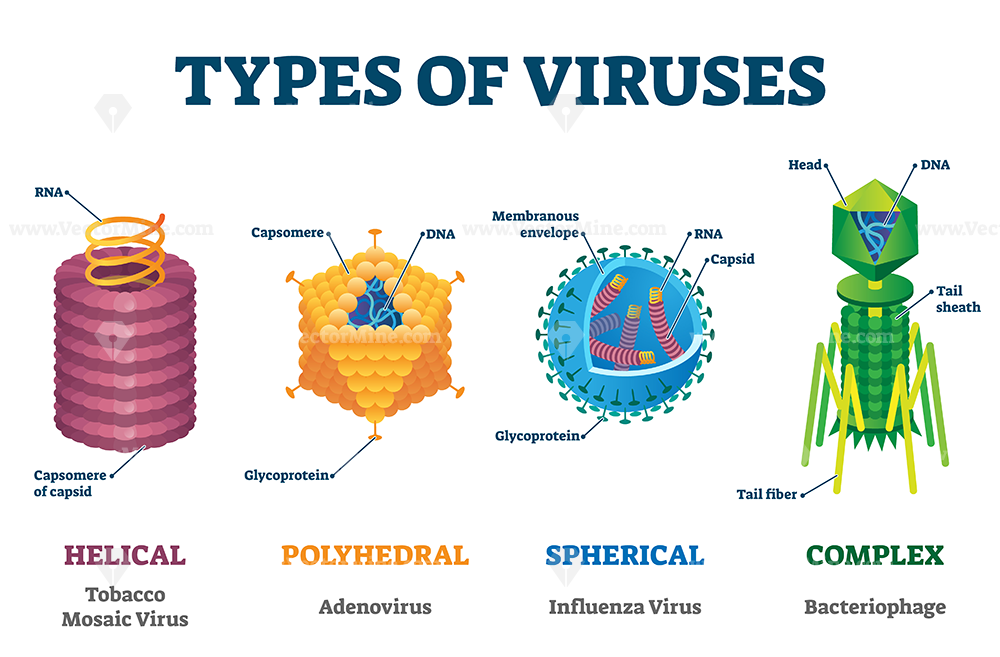
- Cubical virus:
they are also known as icosahedral symmetry virus
Eg. Reo virus, Picorna virus
- Spiral virus:
they are also known as helical symmetry virus
Eg. Paramyxovirus, orthomyxovirus
- Radial symmetry virus:
eg.Bacteriophage
- Complex virus:
Classification of virus on the basis of replication properties and site of replication
- Replication and assembly in cytoplasm of host:
- All RNA virus replicate and assemble in cytoplasm of host cell except Influenza virus
- Replication in nucleus and assembly in cytoplasm of host:
- Influenza virus, Pox virus
- Replication and assembly in nucleus of host:
- All DNA viruses replicate and assemble in nucleus of host cell except Pox virus.
- Virus replication through ds DNA intermediate:
- All DNA virus, Retro virus and some tumor causing RNA virus replicates through ds DNA as intermediates.
- Virus replication through ss RNA intermediate:
- All RNA virus except Reo virus and tumor causing RNA viruses.
Classification of virus on the basis of host range:
- Bacteriophage:
- Phage are virus infecting bacteria. Eg, λ phage, T2, T4, φ174, MV-11
- Plant virus:
- Those virus that infects plants. Eg. TMV, cauliflower mosaic virus
- Animal virus:
- Those virus that infects animals. Eg. Polio virus, Retro virus, Herpes virus, Adeno virus
- Insect virus:
- Virus that infects insects. Eg. Baculovirus, Sacbrood virus, Entomopox virus, Granulosis virus
Classification of virus on the basis of mode of transmission:
- Virus transmitted through respiratory route:
- Eg, Swine flu, Rhino virus
- Virus transmitted through faeco-oral route:
- Hepatitis A virus, Polio virus, Rota virus
- Virus transmitted through sexual contacts:
- Virus transmitted through blood transfusion:
- Zoonotic virus:
- virus transmitted through biting of infected animals;
- Rabies virus, Alpha virus, Flavi virus
Baltimore classification System
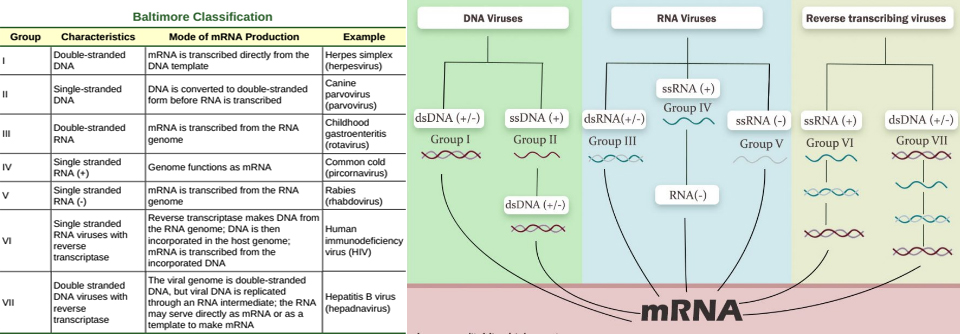
- In 1971, a Nobel Prize-winning virologist David Baltimore first introduced the Baltimore Classification of the virus. The Baltimore classification system is considered as the most commonly used system of virus classification.
- This classification system divides the viruses into seven groups based on their manner of messenger RNA (mRNA) synthesis. In this classification, the viruses were organized based on their manner of mRNA synthesis during the replication cycle of virus.
- The Baltimore classification system focuses on a few important characteristics of nucleic acid such as either it made up of deoxyribonucleic acid (DNA) or ribonucleic acid (RNA); genome strandedness such as either single- or double-stranded; sense of the genome such as either positive or negative sense.
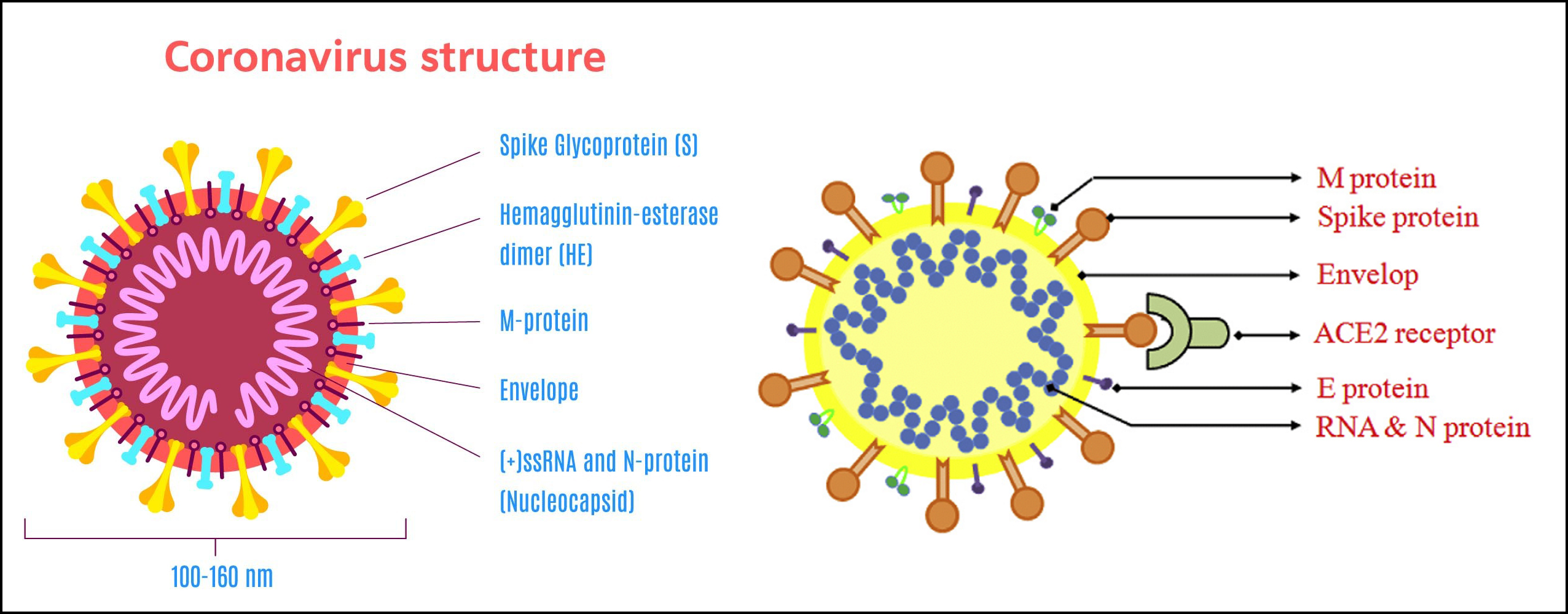
*Coronavirus is a Group IV Virus (+RNA)
How do viruses infect?
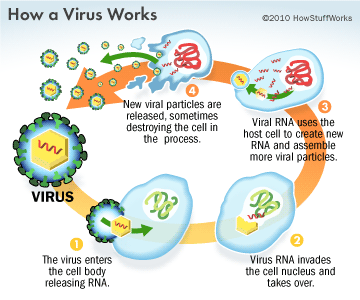
Viruses do not have the mechanisms needed to survive independently and seek out plant, animal, or bacterial host cells where they can use those cells' machinery to replicate.
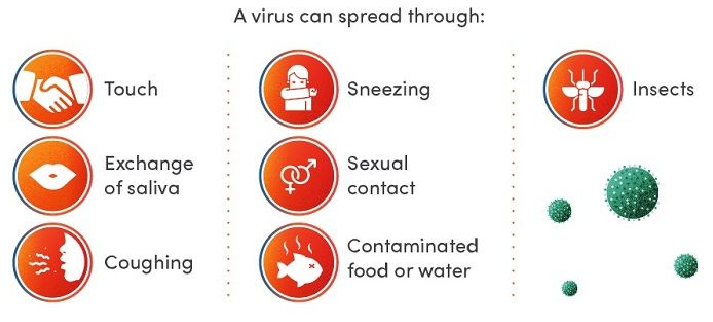
The virus enters hosts through horizontal or vertical transmission, mostly horizontal. Examples of horizontal transmission include the following:
- Direct contact transmission: This refers to transmission via physical contact between an infected and uninfected subject through kissing, biting, or sexual intercourse, for example.
- Indirect transmission: Here, the virus is transmitted via contact with contaminated objects or materials such as medical equipment or shared eating utensils.
- Common vehicle transmission:This transmission mode refers to when individuals pick up the virus from food and water supplies that are contaminated with feces. This often causes epidemic disease.
- Airborne transmission refers to the respiratory infection that occurs when the virus is inhaled.
Once a virus has accessed its host, it recognizes and binds to a specific receptor on the surface of a target cell. One well-studied example is the interaction that occurs between the CCR5 receptor on human T lymphocytes and the gp41 protein present on the surface of the human immunodeficiency virus (HIV).
Life cycle of a virus
Once a virus has infected a host cell, it can replicate within that cell thousands of times. Rather than dividing and reproducing in the way that cells do, viruses go through a process called the lytic cycle.
First, the virus replicates its DNA and protein coats, which are then assembled into new virus particles. This causes the host cell to burst or "lyse," which is why the cycle is so-called. The new virus particles that are released once the cell has burst then infect surrounding host cells.
The process can take as little as twelve hours, as is the case with the norovirus, or as long as several days, as is the case with the Ebola virus.
Some complex viruses called phages bind their DNA to that of their host cell or deposit small pieces of their DNA in the cytoplasm. When the cell then divides, the viral DNA is copied into the daughter cells. This cycle, which is called the lysogenic cycle, is less common than the lytic cycle.
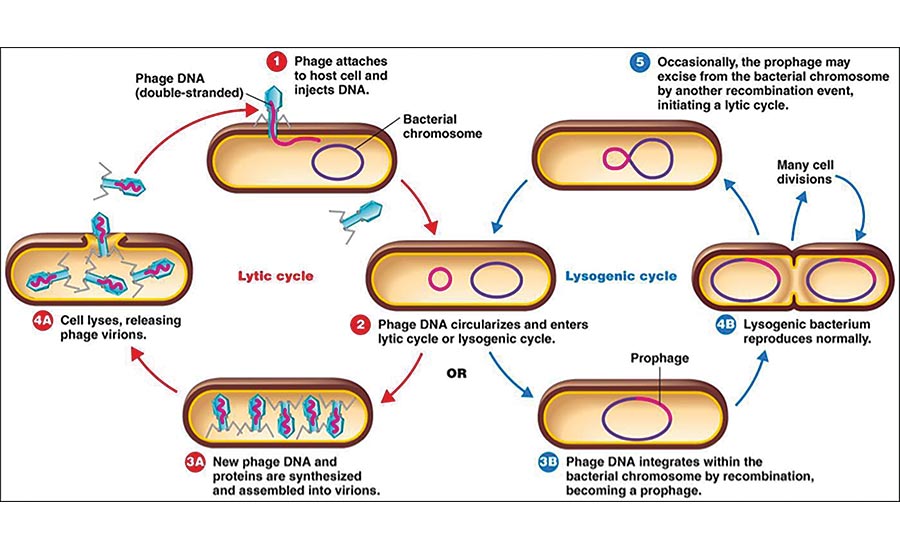
Bacteriophages, often called “phages,” are an abundant type of virus that infect bacteria and other one-cell organisms. They inject their DNA into a host cell, hijacking the host cell to copy their own DNA and make more phages.
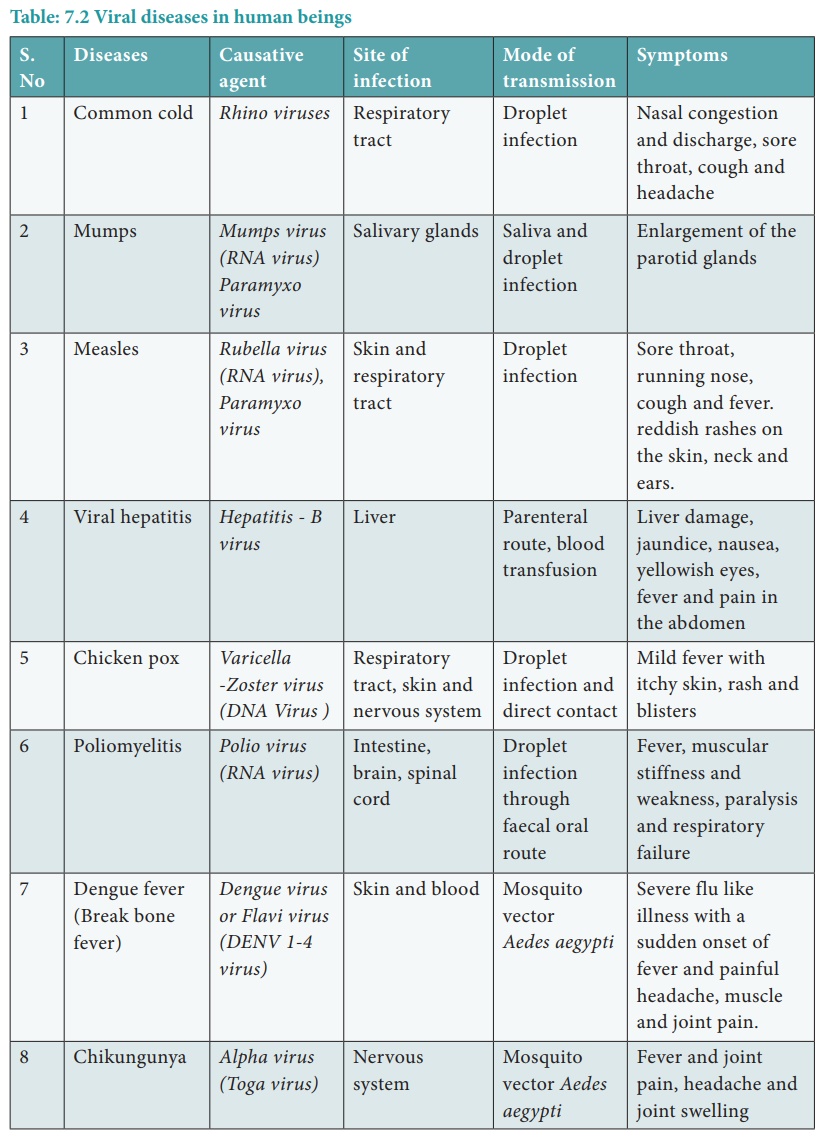
Viral Diseases
Viral diseases are generally grouped into four types on the basis of the symptoms produced in the body organs.
- Pneumotropic diseases (respiratory tract infected by influenza)
- Dermotropic diseases (skin and subcutaneous tissues affected by chicken pox and measles)
- Viscerotropic diseases (blood and visceral organs affected by yellow fever and dengue fever)
- Neurotropic diseases (central nervous system affected by rabies and polio).

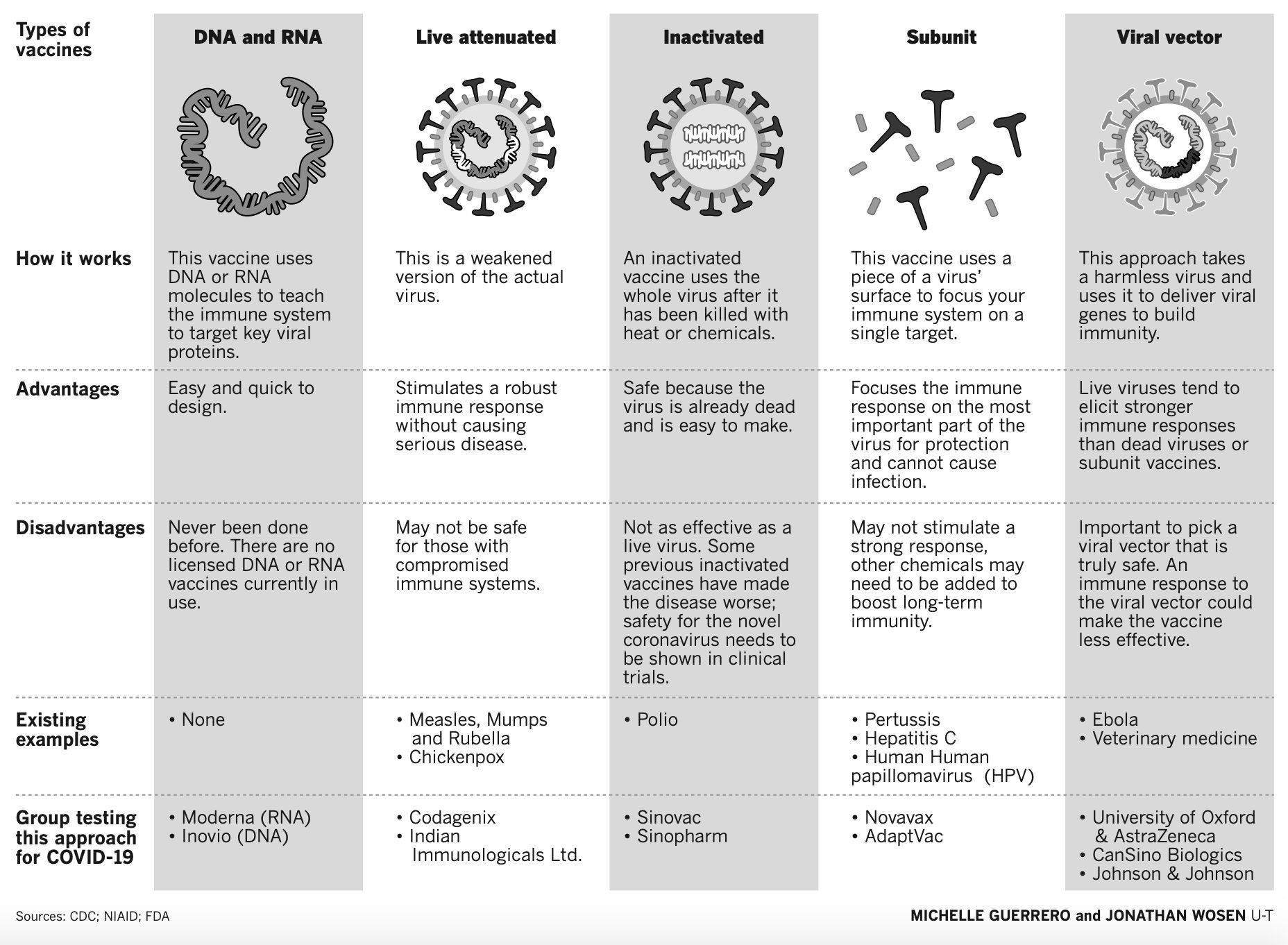
Types of Vaccines to treat Viral Diseases