Description
Disclaimer: Copyright infringement not intended.
Context
First public sector caravan park in Kerala to come up at Bekal.
Details
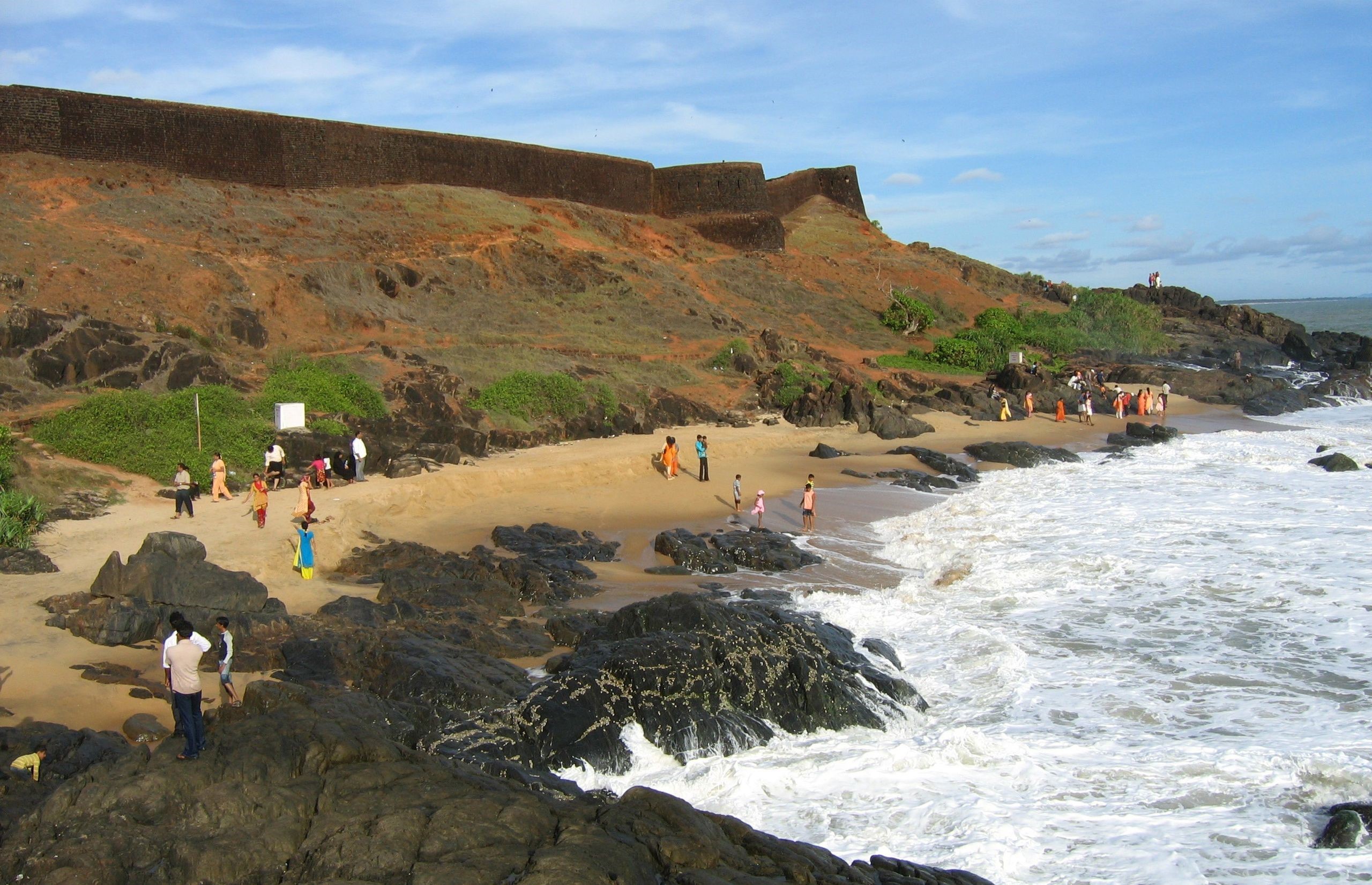
- Bekal Fort, situated in the Kasaragod district of Kerala, India, is a magnificent historical edifice that stands as a symbol of the region's rich heritage and maritime history.
- Built by Shivappa Nayaka of Keladi in 1650 AD, this colossal fortification is renowned as the largest fort in Kerala, encompassing a sprawling 40-acre area.
Architectural Marvel
- Bekal Fort boasts a distinctive keyhole-shaped structure when viewed from above.
- The fort's strategic location near the Arabian Sea makes it appear as though it emerges from the waters. Its architectural features include:
- Laterite Stone Construction: The fort is constructed primarily from laterite stones, showcasing the architectural expertise of its builders.
- Moats and Bastions: Surrounding the fort are wide and deep trenches, designed to serve both defensive and aesthetic purposes. Several bastions and watchtowers are strategically positioned within the fort.
Historical Significance
- Ancient Origins: While the exact date of its construction remains a subject of debate, Bekal Fort has ancient origins, potentially predating its official establishment.
- Tipu Sultan's Influence: Under the reign of Tipu Sultan in the late 18th century, the fort underwent significant expansions and renovations, becoming a strategic military outpost.
.jpg)
Defensive Strategy
- The fort's defensive features include a zigzag entrance, surrounding trenches, and strategically placed holes in the outer walls designed for effective defense against naval attacks.
- The upper, middle, and lower holes were meant for targeting distant, intermediate, and nearby enemies, respectively.
Historical Journey
- Early History: Bekal was part of the Mahodayapuram during the Perumal Age and later came under the control of the Kolathiri Royal Family in the 12th century.
- Nayaka Dynasties: Feudatory chieftains, including the Keladi Nayakas (Ikkeri Nayaks), held sway over Bekal during the period following the Battle of Talikota in 1565.
- Construction and Expansion: The fort's construction was initiated by Hiriya Venkatappa Nayaka and completed in 1650 AD by Shivappa Nayaka. It served as a pivotal hub for dominating and defending the Malabar region.
- Tipu Sultan's Era: Bekal Fort played a crucial role during Tipu Sultan's military campaigns, especially in his quest to capture Malabar.
- British Control: Following Tipu Sultan's death during the Fourth Anglo-Mysore War in 1799, Bekal Fort came under the control of the British East India Company.
Tourism and Cultural Significance
- Tourist Attraction: Today, Bekal Fort is a prominent tourist destination, attracting visitors from across the globe. Tourists can explore the fort's historical relics and enjoy panoramic views of the Arabian Sea.
- Religious Harmony: The presence of the Mukhyaprana Temple of Hanuman and an ancient Muslim mosque near the fort exemplifies the religious harmony that has historically prevailed in the area.
Tourism Development
- Government Initiatives: Recognizing its cultural significance, the Kerala government declared Bekal Fort a special tourism area in 1992. Subsequently, the Bekal Tourism Development Corporation was established to promote and develop this historical site.
Cinematic and Artistic Recognition
- Film Appearances: Bekal Fort has been featured in various films, including the Tamil movie "Bombay" (song: 'Uyire') and the Malayalam movie "Madhuranombarakattu" (song: 'Dwadashiyil').

Conclusion
Bekal Fort stands as an architectural masterpiece, a historical treasure, and a thriving tourist attraction that beckons visitors to explore its rich history and breathtaking surroundings. It serves as a living testament to the enduring legacy of Kerala's maritime heritage and its cultural diversity.
|
PRACTICE QUESTION
Q. Which ruler is credited with the construction of Bekal Fort in Kerala, India?
a) Shivaji Maharaj
b) Shivappa Nayaka
c) Tipu Sultan
d) Krishnadevaraya
Answer: b)
|