Description
Disclaimer: Copyright infringement not intended.
Context
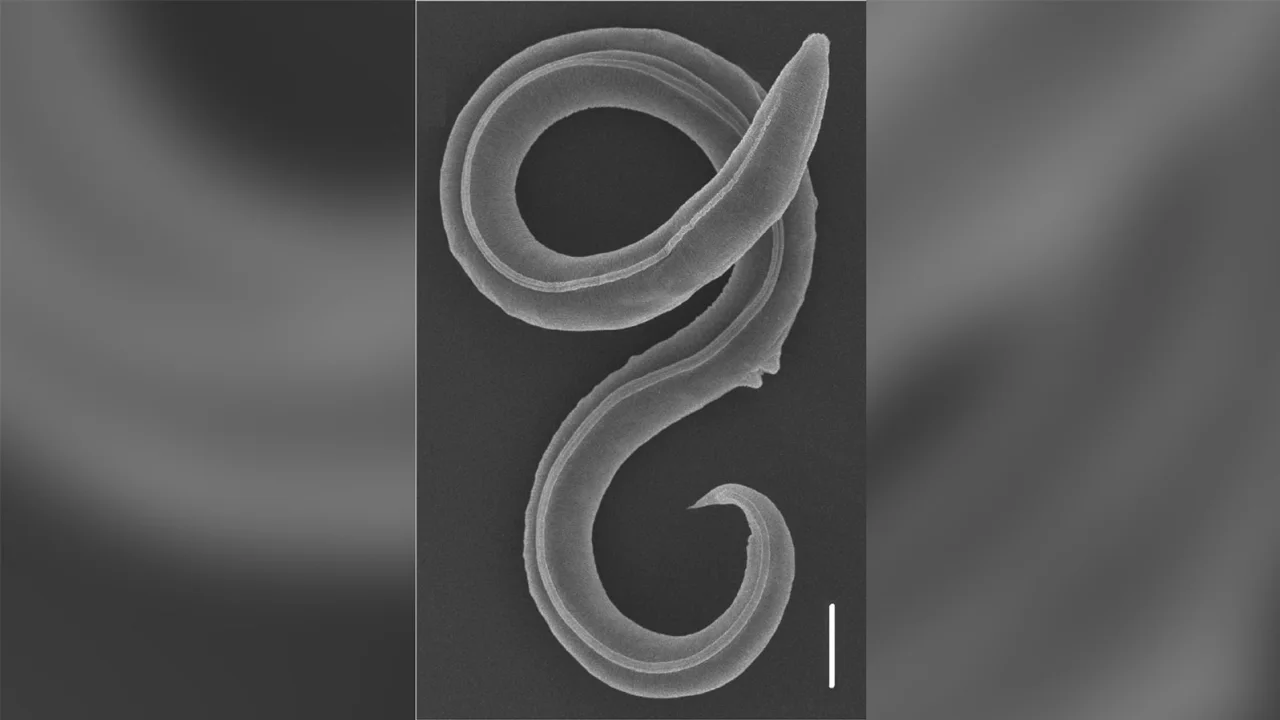
The scientific discovery of a worm that was frozen for an astonishing 46,000 years in the Siberian permafrost.
Details
Discovery of the Ancient Worm
- The worm was found frozen 46,000 years ago in the Siberian permafrost.
- This period was a time when woolly mammoths, sabre-toothed tigers, and giant elks roamed the Earth.
Cryptobiosis: A Dormant Survival State
- The worm survived in a state of cryptobiosis, a dormant condition where it can endure extreme conditions.
- Organisms in cryptobiosis can survive without water or oxygen, withstand freezing temperatures, and high salinity.
"Halting Life" and Revival
- The worm's metabolic rates decreased to an undetectable level during cryptobiosis.
- Scientists revived the worm after thawing it, a major finding as other organisms revived from this state survived for decades, not millennia.
Discovery of a Novel Species: Panagrolaimus kolymaenis
- Genetic analysis revealed that the worm belonged to a previously unknown species, named Panagrolaimus kolymaenis.
- Researchers from Germany and Russia were involved in the study.
Shared Molecular Toolkit
- kolymaenis and another organism, C. elegans, share a molecular toolkit allowing them to survive cryptobiosis.
- Both produce a sugar called trehalose, potentially enabling them to endure freezing and dehydration.
Insights for Evolution and Conservation
- Striking discovery of shared biochemical pathways despite significant evolutionary time apart.
- Studying these organisms may inform conservation biology efforts and help protect other species in extreme conditions.
Potential for Future Research
- Insights gained from the worm's survival may contribute to conservation efforts in the face of changing environments.
- Researchers see the study as a valuable source for actionable insights in protecting species today.

About Siberian Permafrost
- Permafrost refers to permanently frozen ground that remains below 0°C (32°F) for at least two consecutive years.
- Siberian permafrost covers vast regions in northern Russia, spanning across Siberia's tundra and forested areas.
Extent and Environmental Significance
- Siberian permafrost covers approximately 65% of Russia's land area, making it one of the largest permafrost regions in the world.
- The permafrost plays a crucial role in shaping the region's ecosystem, hydrology, and climate.
Permafrost Formation and Characteristics
- Permafrost forms when the ground temperature remains consistently below freezing, causing soil and rocks to freeze.
- It can reach depths of hundreds of meters, creating a frozen subsurface layer.
Active Layer and Seasonal Thaw
- The active layer is the topmost portion of permafrost that thaws during the summer and refreezes during winter.
- The active layer's thickness can vary depending on factors such as temperature, vegetation cover, and snow accumulation.
Environmental Challenges
- Climate Change Impact: Rising global temperatures are causing permafrost thaw, leading to numerous environmental challenges.
- Methane Release: As permafrost thaws, organic matter decomposes, releasing methane—a potent greenhouse gas—into the atmosphere.
- Infrastructure Damage: Thawing permafrost can destabilize the ground, leading to damage to buildings, roads, and pipelines.
Methane Feedback Loop
- Permafrost thaw contributes to a potential positive feedback loop—more thaw releases more methane, which further accelerates warming.
- This feedback loop can intensify climate change and create challenges for mitigating greenhouse gas emissions.
Ancient Discoveries in Permafrost
- The permafrost acts as a natural freezer, preserving ancient remains and organisms for thousands or even millions of years.
- Scientists have discovered well-preserved remains of mammoths, ancient plants, and now, the revived ancient worm.
Scientific Research and Insights
- Researchers study the permafrost to understand past climates, ecological changes, and potential future scenarios.
- Permafrost research provides valuable data for climate modeling, predicting climate change impacts, and understanding biodiversity.
Challenges in Permafrost Study
- Permafrost research is logistically challenging due to its remote and harsh environments.
- Thawing permafrost can make it difficult to access certain areas, hindering research efforts.
Mitigation and Adaptation Strategies
- Climate change mitigation efforts focus on reducing greenhouse gas emissions to limit permafrost thaw.
- Adaptation strategies involve designing infrastructure and land use practices to account for permafrost thaw risks.
|
PRACTICE QUESTION
Q) Explain the phenomenon of cryptobiosis and its significance in the context of reviving a worm frozen for 46,000 years in Siberian permafrost. (150 words)
|